FOCUS on AFB: Fall 2026
Welcome to the Fall 2026 issue of AFB FOCUS, a newsletter from the American Foundation for the Blind.

For over 100 years, AFB has continued Helen Keller’s legacy by addressing the most critical concerns of people who are blind or have low vision. From education and advocacy to research and technological innovation, our work on behalf of more than 32 million Americans with vision loss is made possible by friends like you.
Enjoy the latest updates and insights from AFB! Have comments or suggestions? Please email communications@afb.org.
Featured in FOCUS: Fall 2026
- Focal Point: AFB Documentary Celebrates Keller’s Legacy at Carnegie Hall
- AFB Cornerstone: Past-Trustee Kenneth Miller Bridges Keller and Carnegie Legacies
- AFB Spotlight: New AFB Reports Examine AI’s Impact on People With Disabilities
- What's on the Horizon: New School Season Welcomes New Cohort of AFB Scholars
Consider making a gift today
Continue AFB’s advocacy, research, and knowledge-sharing on issues impacting people who are blind or have low vision. Your tax-deductible gift can help create a world of endless possibilities.
Donate NowFocal Point
AFB Documentary Celebrates Keller’s Legacy at Carnegie Hall
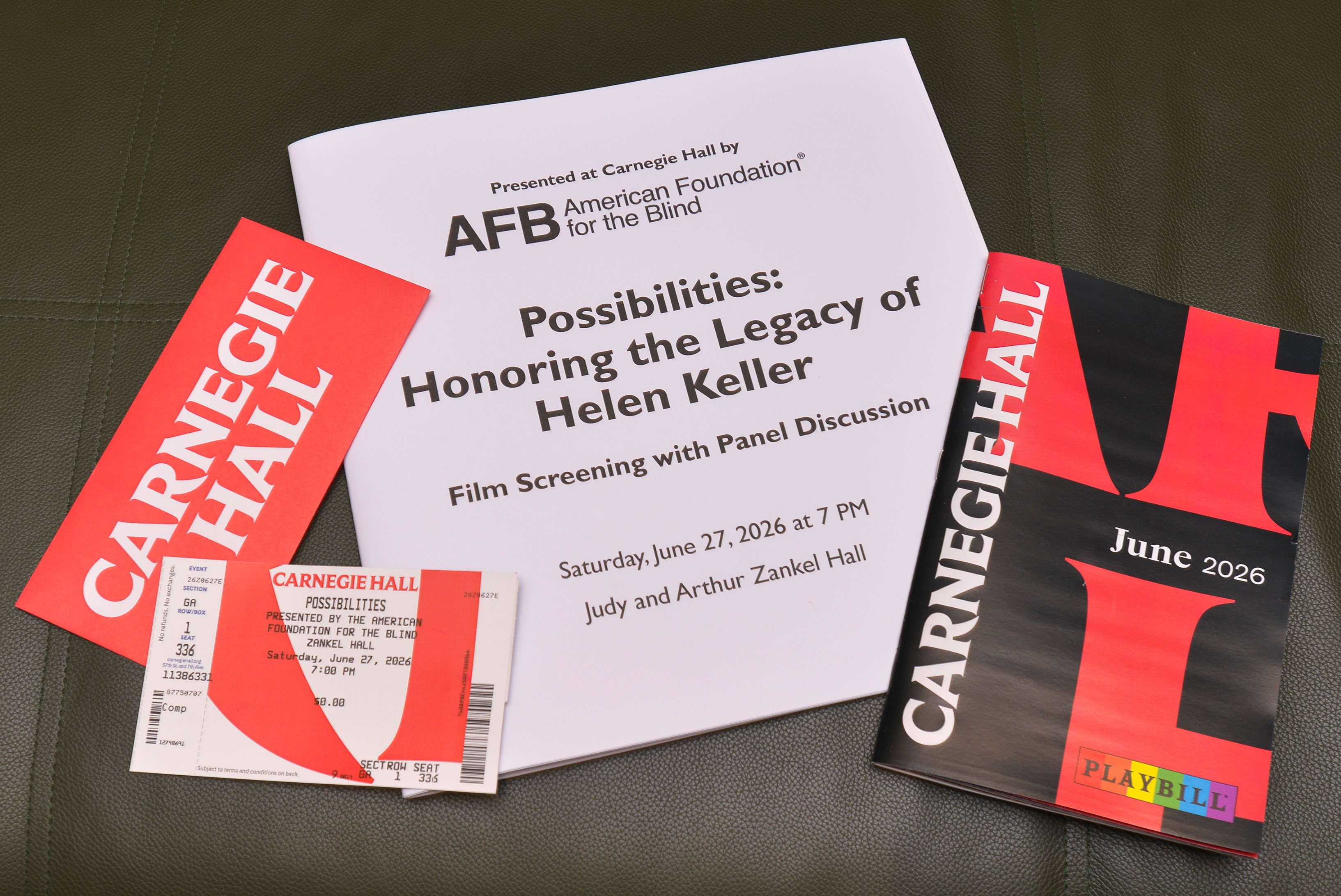
The American Foundation for the Blind (AFB) marked a historic milestone on June 27 with the New York premiere of its award-winning documentary film, Possibilities, before a packed audience at Zankel Hall in Carnegie Hall. Held on what would have been Helen Keller’s 146th birthday, the evening celebrated both Keller’s extraordinary legacy and the film’s innovative approach to inclusive storytelling.
Directed by Bill Sarine and produced in partnership with AFB, Possibilities explores what independence, opportunity, and belonging mean today through the lived experiences of people who are blind or have low vision. Rather than retelling Helen Keller’s familiar childhood story, the film examines the enduring influence of her decades of advocacy and asks how her impact continues to shape the lives of blind Americans in the 21st century.
“We couldn’t dream of a better place for the film’s premiere,” said Tony Stephens, a producer on the film and the assistant vice-president for communications at AFB. “Keller spoke there during her lifetime and maintained a longstanding relationship with the Carnegie family, making the venue especially meaningful for this celebration of her contributions as one of our nation’s leading icons for independence.”
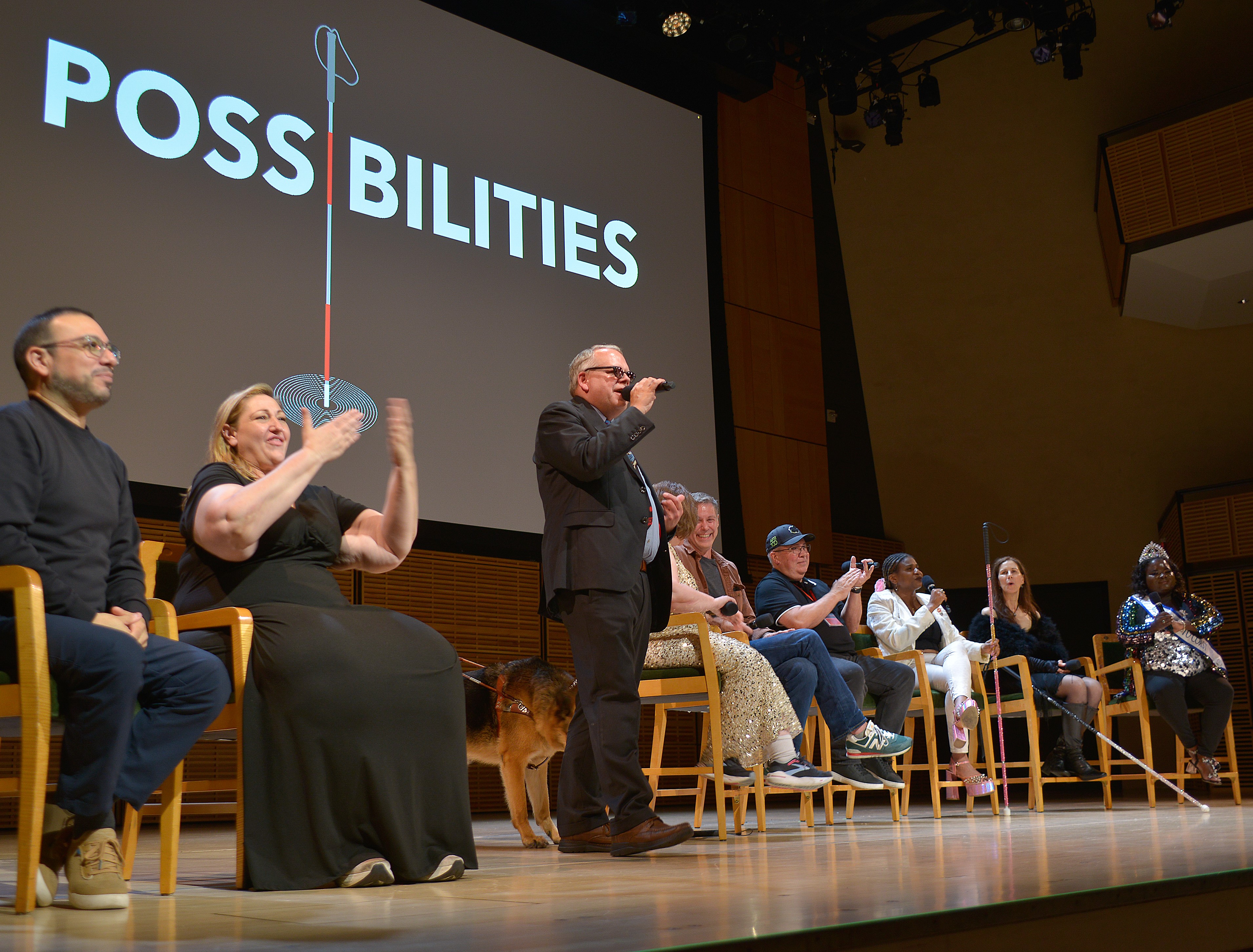
Following the premiere, Stephens led an engaging discussion with director Bill Sarine, audio description producer Roy Samuelson, AD narrator Satauna Howery, and featured voices from the film, including author Leona Godan, advocate Krystel Allen, and award-winning musical artist Lachi. The panel discussed the unique filmmaking process and explored the importance of authentic representation.
Beyond its compelling narrative, Possibilities breaks new ground in accessible filmmaking. It is the first feature-length film created with open audio description, seamlessly woven into the storytelling, allowing blind and sighted audiences to experience the film together without separate versions. Accessibility was built into every stage of production, with blind and low-vision professionals serving as collaborators in creative direction, editing, music scoring, audio description production, and storytelling.
The celebration extended well beyond Carnegie Hall. On the same day as its New York premiere, Possibilities debuted on major streaming platforms, making the film available to audiences in 63 countries around the world.
“AFB is proud to share Possibilities with audiences everywhere and to continue advancing a future where authentic storytelling and accessibility are not an afterthought, but a catalyst for innovation, creativity, and a change in the perceptions of people who are blind,” said Eric Bridges, AFB president and CEO.
A special thanks to the Dr. Robert and Elisa Migel Richards Fund for making this event possible. To learn more, visit www.afb.org/possibilities.
AFB Cornerstone
Past-Trustee Kenneth Miller Bridges Keller and Carnegie Legacies
As America celebrates its 250th anniversary of independence this year, we wanted to feature past AFB trustee Kenneth Miller, who played an important role behind the scenes for the worldwide premiere of AFB’s documentary film Possibilities at Carnegie Hall on Helen Keller’s 146th birthday.
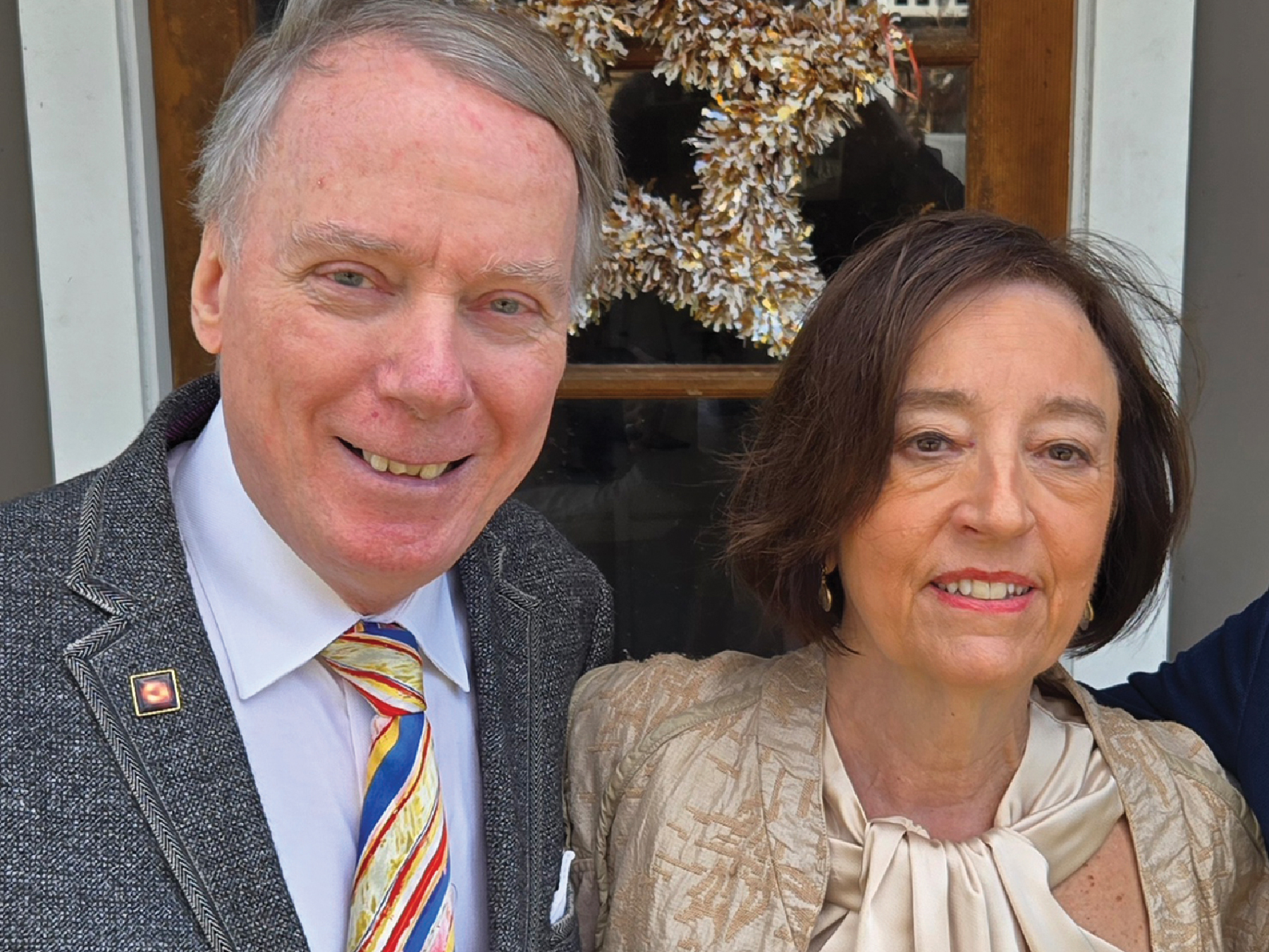
Miller has carried forward a family tradition of service while forging his own distinguished path as an educational and software publisher, cultural leader, and philanthropist. It was through Miller, the great-grandson of Andrew and Louise Carnegie, that AFB built a relationship with Carnegie Hall earlier this year. By opening its doors to one of the world’s most renowned performance halls, AFB was able to bring Keller’s legacy back to this landmark institution 110 years after she spoke at Carnegie Hall.
To us, Miller wrote, “Louise and Helen were friends, forever linked, personally and through AFB to her life-long advocacy for those who are differently enabled. Friends help each other. What better music, then, than the harmony of helping those who would help themselves. Long road. Small steps.”
With a keen focus on the future, Miller has devoted his career to advancing ideas into action. In addition to his service on AFB’s board, Miller has spent five decades with the Smithsonian Institution.
His roles have included serving as a member of the National Board, where he co-founded the Education Committee; chair of the Cooper-Hewitt, Smithsonian Design Museum; and senior strategist for the National Science Resources Center, now the Smithsonian Science Education Center. His work in education reflects a longstanding commitment to expanding access to knowledge and inspiring discovery.
New from AFB Publications

JVIB Celebrates 50 Years of IDEA
On September 23rd, AFB’s Journal of Visual Impairment and Blindness (JVIB) held its first webinar, bringing together leading scholars from the field of blindness to mark the 50th anniversary of the passage of the Individuals with Disabilities Education Act (IDEA). The webinar reflected on 50 years of progress in education for students with disabilities and the role of the U.S. Department of Education in advancing IDEA. A recording of the virtual event is available on AFB’s YouTube channel at www.youtube.com/AFB1921.
AccessWorld Fall Issue Now Online
The Fall 2026 issue of AccessWorld Magazine is now available online. To access the latest issue, along with 26 years of back issues, visit www.afb.org/aw.
AFB Spotlight
New AFB Reports Examine AI’s Impact on People With Disabilities
This summer, the American Foundation for the Blind released three new research reports examining how AI is shaping transportation, employment, and assistive technology. Artificial intelligence is rapidly becoming part of everyday life, and for people who are blind, have low vision, or have other disabilities, it presents both untapped possibilities and critical challenges.
The reports build on AFB’s second round of research on AI published this spring, The AI Quagmire: Benefits, Risks, and Aspirations Through a Disability Lens, which surveyed 1,735 U.S. adults with and without disabilities. The new reports offer a closer look at where AI can expand independence and where accessibility, affordability, privacy, safety, and human oversight remain essential.
“Together, these reports reinforce AFB’s commitment to ensuring that emerging technologies expand opportunity rather than create new barriers of exclusion,” said Stephanie Enyart, AFB chief public policy and research officer. “As we establish a canon of research that measures the impact AI will have on society, it’s important people with disabilities have a voice in shaping a future fueled by AI.”
Navigating Toward AI: Transportation Access in a Changing Technology Landscape explores autonomous vehicles and AI-enabled public transit. The research found particularly strong interest in autonomous vehicles among blind and low-vision participants, while 98% of all respondents emphasized the importance of good public transportation.
Working with the Machine: AI’s Expanding Role in Employment for People with Disabilities examines AI in recruiting, job searches, workplace tasks, and employee surveillance. The report underscores the need for accessible hiring technologies, reasonable accommodations, transparency, and human oversight as AI becomes increasingly integrated into employment.
Finally, Innovation for Access: AI and Its Use as Assistive Technology for People with Disabilities examines AI-powered visual descriptions, captions, and augmentative and alternative communication. While users reported meaningful benefits, the research also highlights the consequences of inaccurate information and privacy concerns when sensitive information is processed by AI.
In September, AFB also released a fourth report in the series, which focuses exclusively on attitudes among the blind and low-vision community. To access this newest report along with the other reports in the series, visit www.afb.org/AIResearch2.
AFB on the Road This Summer
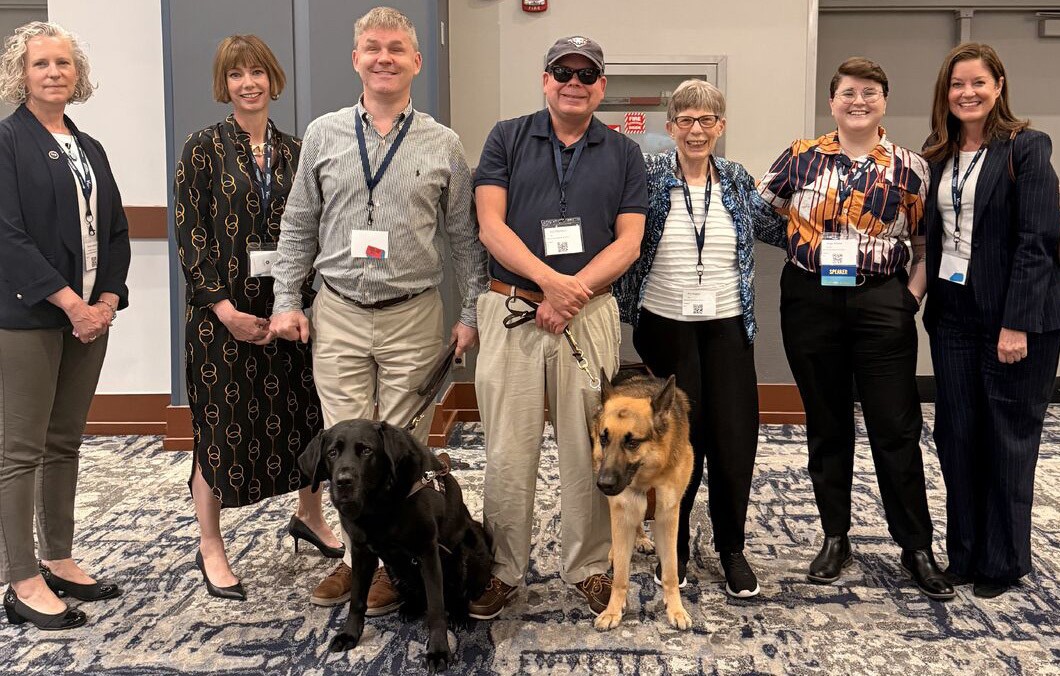
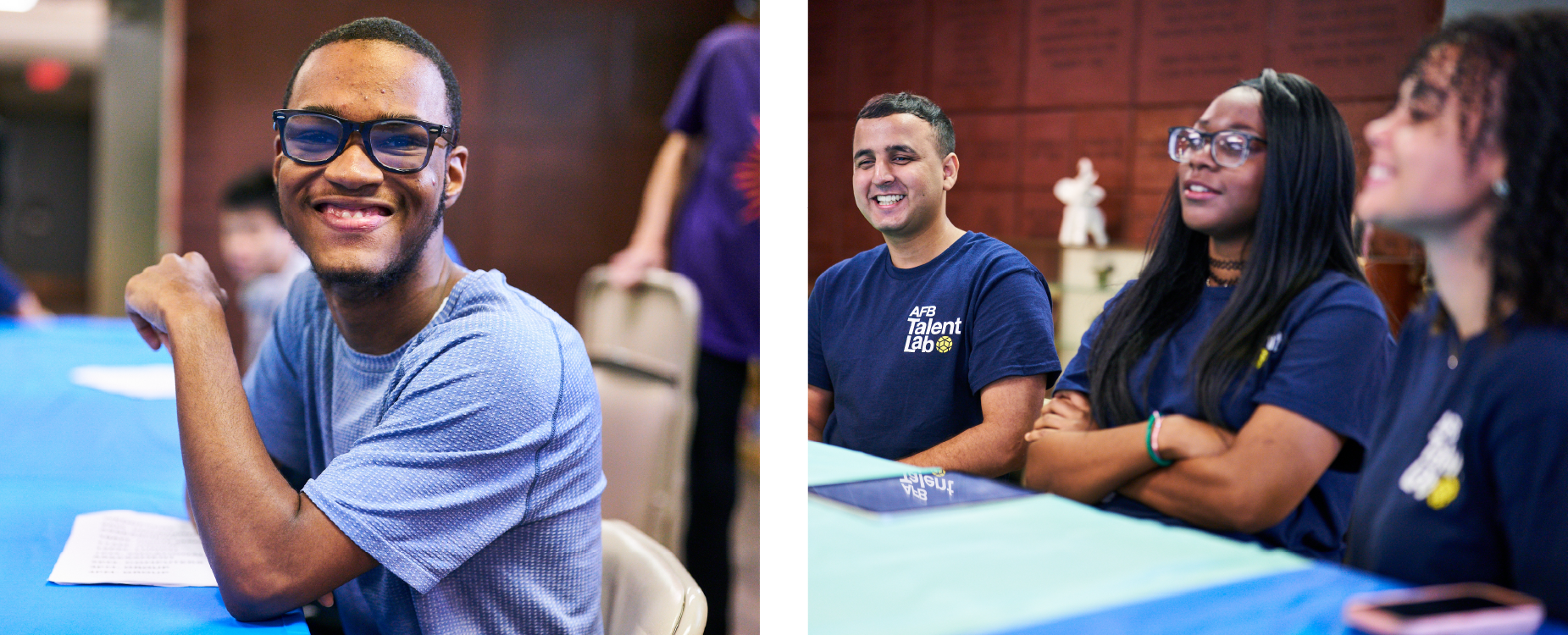
From Columbus and Austin to St. Louis, Louisville, and Pennsylvania, AFB spent the summer connecting with the blindness community at conferences and events across the country. Along the way, AFB shared its latest research, highlighted programs including the AFB Scholars Program and Digital Accessibility Bootcamp, and connected with community members and partners about opportunities in education, careers, and leadership.
What's on the Horizon
New School Season Welcomes New Cohort of AFB Scholars
As college and university students return to the classroom this fall, AFB is excited to welcome the newest cohort of AFB Scholars. Through scholarships made possible by the Lulu J. Alonso Scholarship Fund, scholars receive financial support as well as mentoring from AFB leaders, opportunities to attend conferences, and personalized career coaching.
“Each of our scholars this year represents the best and brightest minds contributing through their studies in key targeted areas where AFB has identified the greatest opportunity for positive impact to society,” said Bethany Johnson, AFB vice president for programs. “It’s exciting to imagine what opportunities will await each of our scholars as they continue to chart new territory in their respective fields.”
This year’s AFB Scholars are:
Isabelle Bailey, Master of Social Work student at the University of Maine, with minors in Gerontology and Interdisciplinary Disability Studies.
Bradley Blair, Educational Psychology doctoral student at Northern Illinois University, focused on Research, Evaluation, and Assessment.
John Mobley IV, Ph.D. candidate in Engineering Education Research at the University of Michigan, affiliated with Nuclear Engineering & Radiological Sciences and Public Policy.
Amelia Laing, incoming Wellesley College student planning to major in Chemistry.
Scholarship applications will open this November. For more details, visit www.afb.org/scholarships.