FOCUS on AFB: September 2025
Focal Point
Community Events in West Virginia Raise Awareness of Blindness and Low Vision
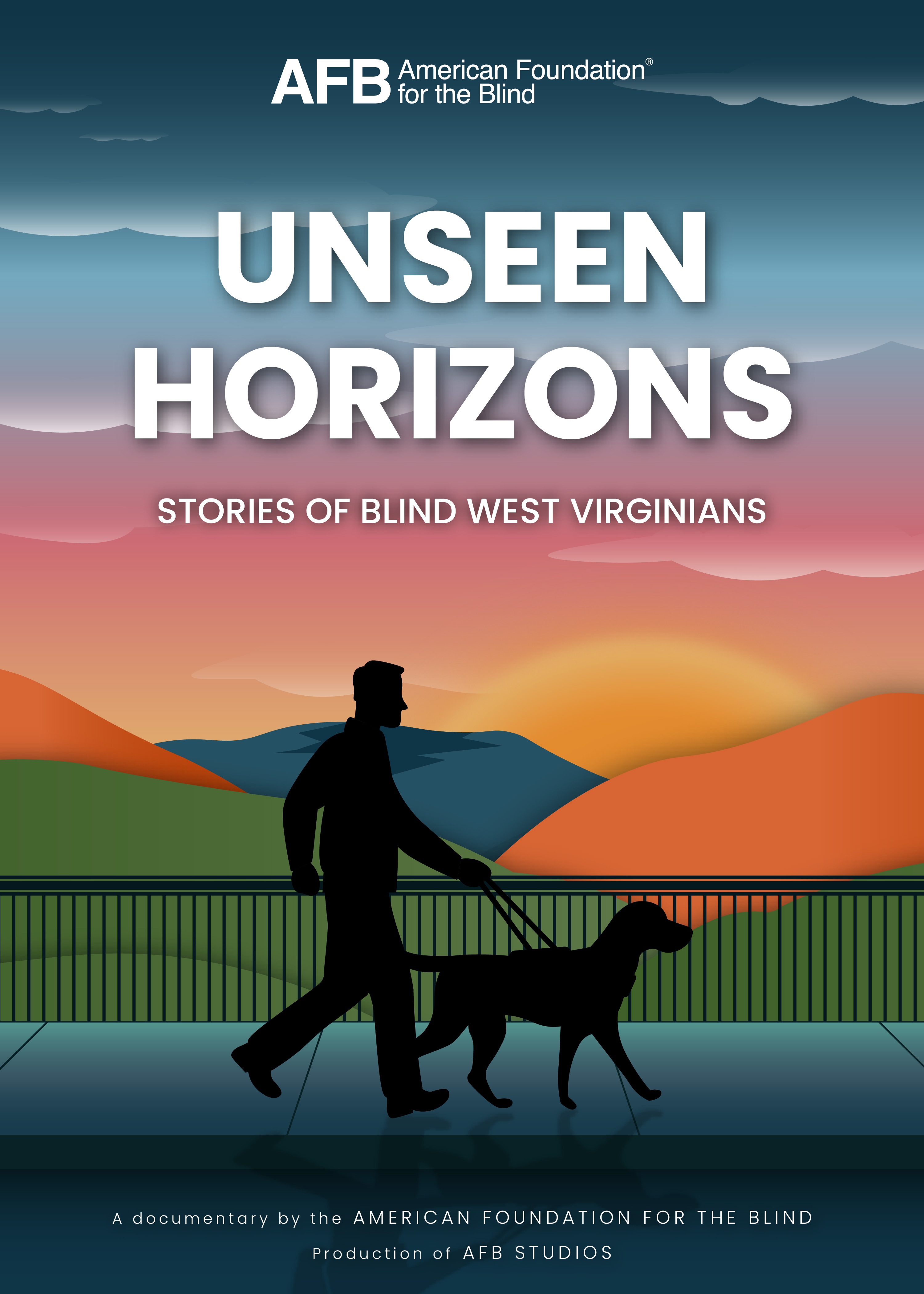
On August 26, AFB hosted two community events at Marshall University in Huntington, West Virginia, raising awareness of vision loss among older adults and premiering its new documentary short, Unseen Horizons.
According to the Centers for Disease Control and Prevention (CDC), West Virginia has the highest prevalence of blindness in the U.S. These events reflect AFB’s ongoing commitment to challenging misconceptions about blindness nationwide.
“For over two decades, AFB has maintained its business and finance operations in Huntington, and for many staff, giving back to this community is deeply meaningful,” said Tony Stephens, AFB’s Assistant Vice President for Communications and director of Unseen Horizons.
Stephens, who is blind, traveled to the region over the past year to document the lives of six West Virginians with vision loss. “Too often, documentaries portray people with disabilities as superheroes,” he explained. “We wanted to show a real journey toward independence and freedom.”
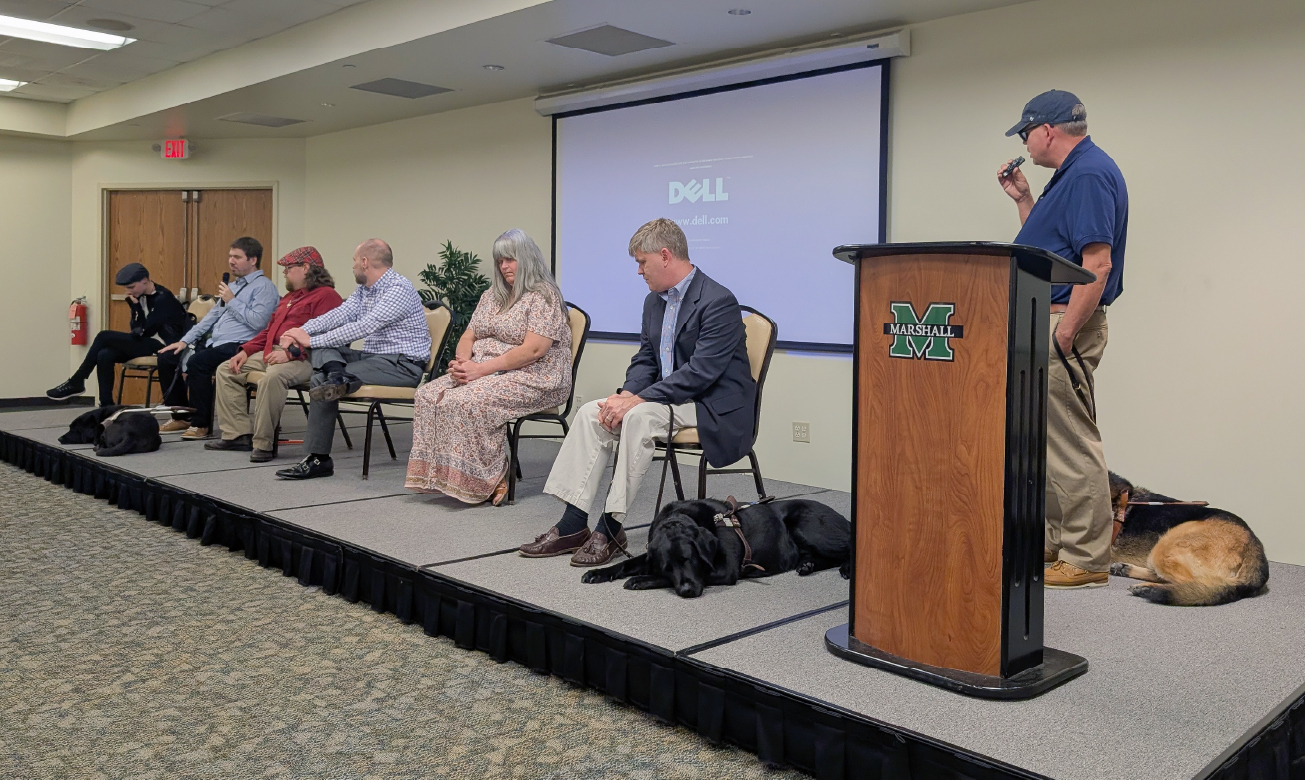
In addition to the film’s evening premiere, AFB hosted an afternoon session focused on older adults experiencing vision loss. The session, led by Dr. Arielle Silverman, AFB’s Director of Research, and Dr. Pris Rogers, AFB’s Senior Advisor for Aging and Vision Loss, brought together healthcare advocates and leaders from area assisted living centers.
AFB President and CEO Eric Bridges attended the events, made possible through the generous support of the Teubert Foundation.
Watch Unseen Horizons now on the AFB YouTube channel or learn more at afb.org/unseen-horizons.
AFB Spotlight
New AFB Survey Seeks Better Understanding of AI Usage
As part of its ongoing research into the impact of artificial intelligence on society—particularly for people with disabilities—the AFB Public Policy and Research Institute (PPRI) has launched a national study to examine AI’s role in everyday life. The survey explores how AI is being used in employment, transportation, healthcare, and daily living, with the goal of understanding its benefits and challenges for people with and without disabilities.
“We’re deeply interested in learning more about AI’s true impact on American life,” said Stephanie Enyart, AFB’s Chief Public Policy and Research Officer. “The more we capture how people of all abilities use AI, the better we can guide developers to ensure accessibility in our rapidly changing world.”
This survey represents the second phase of PPRI’s work on AI. The first phase, released in January, highlighted predictions from experts across technology, nonprofit, and public sectors about AI’s impact on the disability community.
Anyone over 18 living in the U.S. is eligible to participate, regardless of disability status. PPRI hopes to achieve a balanced pool of respondents. The survey closes at the end of September.
Take the survey or learn more at www.afb.org/AISurvey.
AFB Showcase
AFB Scholars Program Opens Doors of Opportunity

Earlier this summer, the American Foundation for the Blind (AFB) introduced the inaugural cohort of its new AFB Scholars Program. As students return to campuses nationwide this fall, AFB is committed to supporting the next generation of leaders who are blind or have low vision.
The program, established through the Lulu J. Alonso Scholarship Fund, honors the legacy of Lulu J. Alonso, a teacher of the visually impaired and professor emerita at Michigan State University. Her generosity ensures sustainable scholarship opportunities for years to come.
In its first year, AFB awarded four scholarships—three to graduate students and one to an undergraduate—pursuing studies in law, medicine, public policy, and science. Scholarships provide up to $20,000 for undergraduates and $28,000 for graduate students.
“The AFB Scholars Program offers a transformative opportunity for blind students,” said AFB President and CEO Eric Bridges. “These scholarships will help turn the dreams of many exceptional students into reality for years to come.”
Beyond financial support, recipients are paired with mentors from AFB’s leadership and will attend the annual AFB Leadership Conference or a similar event in their field. The program provides invaluable networking and professional development opportunities, preparing scholars to become leaders who advance positive perceptions of people with disabilities.
Learn more about the current scholars and how to apply for the 2026–2027 cycle by visiting the program page.
AFB Cornerstone
Helen Keller Society Creates Legacies of Endless Possibilities
This past August, AFB relaunched its Helen Keller Society, a special group of dedicated donors who have indicated support of AFB through planned giving. This form of charitable bequests has been a substantial driver toward assuring AFB’s work will continue for future generations, and the society offers a powerful way that donors can create a legacy in their name through remembering AFB in their estate.
The Helen Keller Society is named in memory of AFB’s greatest champion who served AFB for 44 years. Keller, who first joined AFB in 1924, was a powerful figure in American history; not only an advocate for people with disabilities, but an ambassador for peace across the world.
AFB’s award winning documentary film Possibilities, which has concluded a successful year screening at festivals, captured Helen’s own impact and legacy, echoing her mantra, “Tomorrow, what possibilities there are in that word.”
“The power of planned giving over the years has helped make Helen’s own dreams a reality for so many of us who are blind or have low vision,” said Melody Goodspeed, AFB’s major and planned gifts officer and a producer on the documentary film. “Not only does it sustain us today, but it makes tomorrow possible through continuing to keep the flame burning bright."
The Helen Keller Society honors compassionate individuals who, like Helen Keller, believe in a world full of endless possibilities for people who are blind or low vision. By including the American Foundation for the Blind in a person’s estate plans, that person joins a community dedicated to lifelong empowerment, equal opportunity, and access for all.
To learn more about the Helen Keller Society, contact Melody Goodspeed, AFB’s Major and Planned Gifts Officer, at mgoodspeed@afb.org.
Off the AFB Bookshelf
Celebrating 25 Years of AccessWorld

This year marks a major milestone for AFB’s groundbreaking publication AccessWorld. For 25 years, AccessWorld has been the premier source for news, reviews, and analysis of access technology for people who are blind or have low vision.
Launched in January 2000, AccessWorld was created to fill a critical gap at a pivotal moment. As personal computers grew more sophisticated and the internet transformed daily life, the magazine provided timely insights into the rapidly evolving field of assistive technology. Since then, AccessWorld has continued to track industry trends while anticipating the future of digital accessibility.
“In the early days, most accessible technologies were built specifically for people who are blind or have low vision, and many mainstream devices we reviewed were entirely inaccessible,” said Aaron Preece, editor-in-chief of AccessWorld. “Now, although barriers remain, there are far fewer devices or apps that are completely unusable, thanks in part to those advocates and consumers who helped change the tide based on what they learned through AccessWorld.”
For a quarter century, AccessWorld has highlighted both progress and persistent challenges, ensuring accessibility remains central to technology innovation. Thousands of readers have relied on its trusted reporting to navigate an ever-changing digital landscape. Today, the publication continues to not just empower people who are blind or have low vision to fully participate in what has become a second digital renaissance, but it also informs those developers creating the next generation of software applications.
“It is heartening to see how far the industry has come,” added Preece. “And through the lens of AccessWorld, it’s inspiring to reflect on how much further we can go in advancing digital inclusion.”
To read the latest issue of AccessWorld—or explore the complete archive of back issues—visit www.afb.org/aw. Be sure to also subscribe to the AccessWorld podcast, available wherever you get your podcasts.