Working with the Machine
AI’s Expanding Role in Employment for People With Disabilities
Supplementary Research | June 2026
This report provides a comprehensive analysis of AI and employment based on data from the larger survey, The AI Quagmire: Benefits, Risks, and Aspirations Through a Disability Lens. In this survey, researchers from the American Foundation for the Blind (AFB) surveyed U.S. adults with and without disabilities to assess attitudes regarding the use and impact of AI. Expanding on the larger survey's findings, Working with the Machine analyzes data from participants who were employed or seeking employment to understand how AI affects job applicants, workers, and business owners with disabilities.
Download the Working with the Machine report or access all contents below.
Download Working with the Machine Report
Authors: Alyssa Shock, Psy.D. | Arielle M. Silverman, Ph.D.
Contributors: Sarahelizabeth J. Baguhn, Ph.D. | William E. Hanuschock, III, M.Ed. | Mana Hashimoto, M.A. | Carmel Heydarian, M.S. | Omar Khan, B.S. | Mei-Lian Vader, M.S. | Angie L. Whistler, M.S.Ed.
Table of Contents
Automation in the Job Search Process
Language Note
In this report, we have used both person-first language (“people with disabilities”) and identity-first language (“disabled people”) when describing disability. This is an intentional choice meant to honor differing preferences within the broader disability community, an approach supported in research literature (e.g., Dunn & Andrews, 2015). In addition, we have used identity-first terms when specifically describing three disabilities: “BLV people” meaning blind and low-vision people; “D/HH people” meaning deaf/Deaf and hard-of-hearing people; and “autistic people.” This choice reflects the strong preference for identity-first language voiced by many members of these particular communities.
Acknowledgments
We thank Sarah Malaier and Stephanie Enyart for developing the recommendations at the end of this report and for offering feedback on earlier drafts. We are also grateful to the working group of 19 disability organizations whose input shaped the survey questions and design. Finally, we thank the Ford Foundation for supporting the American Foundation for the Blind’s efforts on AI and workplace technology to ensure equal rights for people with disabilities.
Introduction

An individual's work, or vocation, represents one of the most significant domains of adult life, providing financial stability and often contributing meaning and structure. While individuals may remain within a profession for much of their lives, work does not occur in a vacuum. Numerous forces shape the workplace and influence how work is performed over time. One of the most influential of these forces is technology, which has repeatedly altered both the methods and the nature of work (DeBell, 2006).
Artificial intelligence (AI) is one form of technology currently exerting substantial and rapid influence on the workplace. Even as companies adopt AI at scale, it has been challenging to understand exactly how AI is impacting workers. A recent Gallup poll found that AI use on the job has steadily increased since 2023. As of the fourth quarter of 2025, 26% of workers reported using AI at least a few times per week while 12% reported daily use, yet nearly half (49%) of workers reported never using AI in their roles (Kemp, 2025). Nevertheless, governments and civil society groups are beginning to grapple with the opportunities and challenges posed by AI. For example, the U.S. Department of Labor (2026) has published an AI literacy framework emphasizing the importance of workforce competencies related to workers’ evaluation and use of AI.
The American Foundation for the Blind (AFB) is interested in understanding how AI affects job applicants, workers, and business owners with disabilities. Does AI influence the ability to get a job, retain employment, advance in one’s career, or carry out essential job functions independently?

Various assistive and mainstream technologies have long been used in the workplace to aid people with disabilities, and the law requires most employers to provide reasonable accommodations, including assistive technologies, to applicants and workers as appropriate. In order to complete job applications, training for a job, or the functions of a job independently, qualified people with disabilities are entitled to reasonable accommodations under Title I of the Americans With Disabilities Act (ADA) (Americans with Disabilities Act, 1990). Reasonable accommodations are “changes to the application or hiring process, the job, or the work environment” that allow the person with a disability to have an equal opportunity to obtain, retain, and benefit from employment and to perform the essential functions of the job for which they were hired (Job Accommodation Network, n.d.-a). Examples of accommodations include changes in the work schedule, changes to job structure, or use of assistive technologies on the job. Accommodations must be reasonable in that they are provided in ways that work for the person with the disability while also not being unduly difficult for the employer to provide (Job Accommodation Network, n.d.-a).
In light of this legal context, one main objective of this research was to see how AI interacts with the disability experience and with the accommodations process or delivery of accommodations for applicants and workers with disabilities.
In a prior study, AFB surveyed 32 experts in artificial intelligence regarding their perceptions of AI’s potential impacts across multiple domains, including the workplace. Experts expressed caution regarding AI use in candidate screening, emphasizing the importance of transparency and human oversight. While experts were uncertain whether AI would ultimately harm or benefit workers with disabilities, they highlighted concerns regarding the potential for AI systems to exacerbate bias (Silverman et al., 2025).
Building on these findings, the American Foundation for the Blind conducted a second study examining how individuals with and without disabilities use and are impacted by AI. A larger report from that study was published examining AI use across multiple domains (Silverman et al., 2026). This report presents an in-depth analysis of the employment findings from that study, examining data from participants who were employed or seeking employment.
The present report examines the following questions:
- How is automation used by job recruiters during candidate selection, and how does this impact candidates with and without disabilities?
- How are job candidates using AI in their job search processes?
- How are workers with and without disabilities using AI on the job?
- What workplace policies govern AI use, and how do these policies impact workers with and without disabilities?
- What benefits and challenges do workers associate with AI tools on the job?
- How do workers with and without disabilities wish to use AI in ways they currently cannot due to barriers or policies?
- How does AI-based workplace surveillance impact workers with and without disabilities?
Description of Participants
This report presents a secondary analysis of data from a larger survey. The larger survey comprised 1,735 participants, including 1,070 with disabilities and 665 without disabilities. Complete demographics for the full sample are available in the summary report, The AI Quagmire: Benefits, Risks, and Aspirations through a Disability Lens (Silverman et al., 2026).
The current analysis focused on two subsamples: a group of participants who had looked for jobs within the preceding two years (hereafter called “job candidates”) and a group who had worked for pay (hereafter called “workers”). Participants were allowed to be in both subsamples if they had both worked and looked for work.

The job candidate group had 362 participants, including 251 who had disabilities (69%) and 111 who did not (31%). The worker subsample consisted of 1,374 participants (57% disabled, 43% nondisabled). Within the worker group, 1,069 had worked full-time (54% disabled, 46% nondisabled) and 456 had worked part-time (66% disabled, 34% nondisabled), with many participants working both full-time and part-time. Most of the job candidates (301, or 83%) were also employed at least part-time and thus were included in both subsamples. While we made efforts to ensure our sample’s diversity, our respondents were more highly educated than the general population, with 72% holding at least a bachelor’s degree. This frequently happens in Internet-based survey samples (Henrich et al., 2010). Some findings may be different for less educated samples. For example, people with less formal education may be employed in sectors where AI is used less frequently in candidate selection or in the workplace.
Automation in the Job Search Process
Use of artificial intelligence is common across the employment landscape, beginning in the job-seeking process. Job recruiters may incorporate AI into candidate selection. We explored job candidates’ experiences of this in automated interviews and job-related assessments. These tests and automated systems may be powered either by AI or a human-written algorithm. Our research considers both because it may be difficult for individual respondents to discern which was used in their situation.
In this study, the 362 job candidates were asked whether they had been exposed to automated interviews or assessments, and people who answered yes or were unsure took the section of our survey regarding this domain. 197 candidates (56%) answered questions regarding automated assessments and interviews. 42% of all job candidates stated that they were required to undergo an automated interview or test, and the other 14% were unsure. No differences were observed based on disability status. While this does not indicate that a majority of job candidates have definitely experienced automated assessments, it indicates that automated tests and interviews are being experienced equally by both people with and without disabilities, and that people with disabilities are not self-selecting out of automated tests and interviews. For this reason, an important inquiry in this study is whether people with disabilities have equal access to automated assessments and equal chances of success, with or without the use of reasonable accommodations.
Job candidates who encountered an automated assessment were asked about the types of assessments they were required to complete. Participants could select more than one response. The most common forms of automated assessments were computer-based multiple-choice tests (162 candidates), followed by typing tests (98 candidates) and video interviews in which computers asked the questions (96 candidates). Less commonly, candidates were administered image-based puzzles, game-like assessments in which tasks changed based on prior answers (adaptive tests), or other types of tests. 37 job candidates stated that they were required to take a test in which a computer monitored their behavior.
After answering general questions about the types of automated assessments required on job applications, candidates were asked to consider one automated assessment they had taken in the past two years and to elaborate on that specific experience. They were asked questions regarding perceived difficulty, overall impressions of the assessment, whether they had enough time to complete it, whether changes to their computers were required, and whether any accessibility barriers arose during the process. Because an automated test or interview could simply be a computerized task that did not involve AI, participants were asked about their perceptions of whether the assessment was AI-based. 64% of disabled job candidates and 59% of nondisabled job candidates thought the test or interview probably or definitely was AI-based.
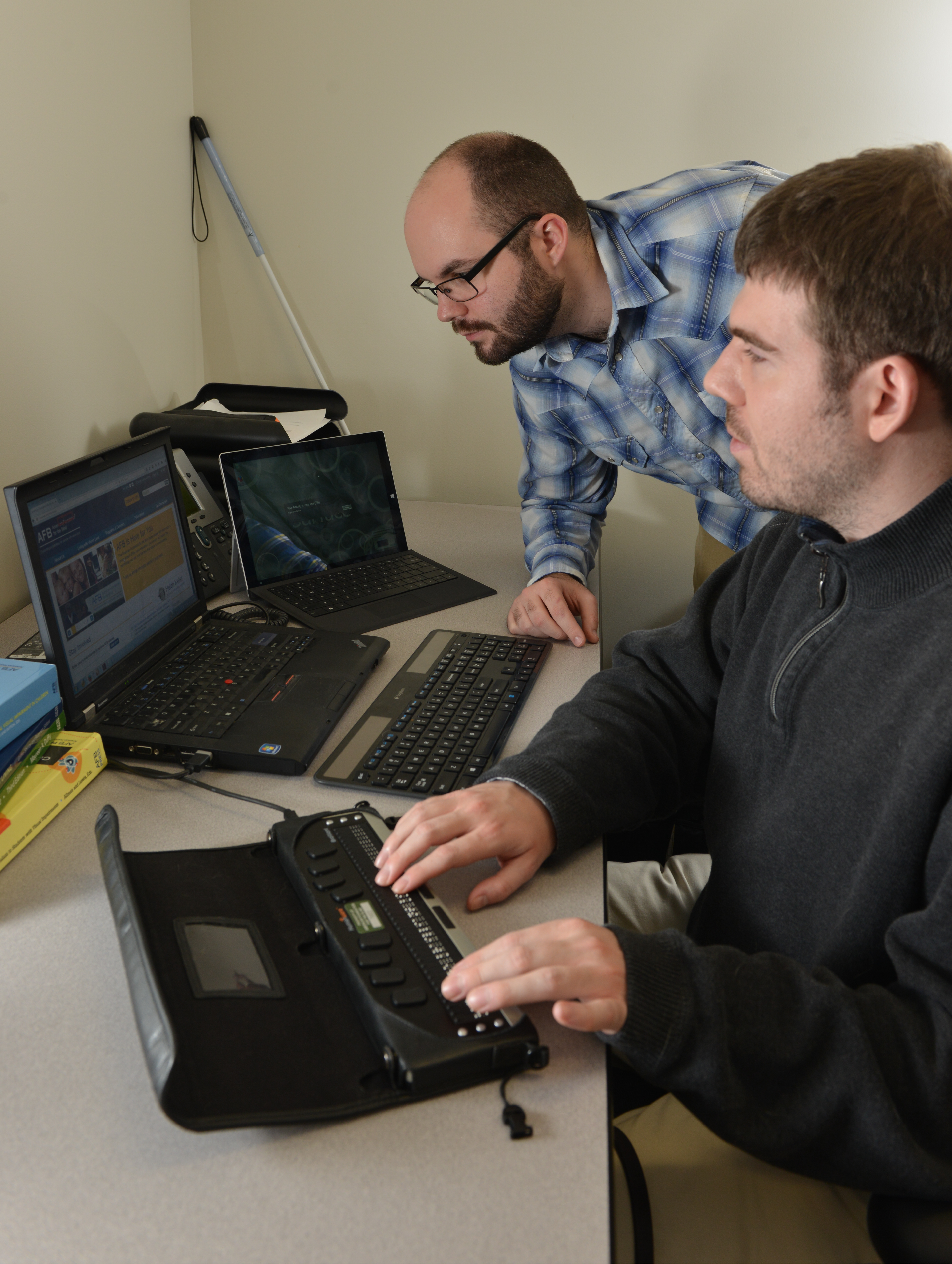
Notable findings revolved around the accessibility of the automated tests and interviews that candidates were expected to complete. Participants were asked if they had any trouble completing the automated assessment. Most participants were able to complete the automated assessment within the allotted time. However, 10% of disabled job candidates (n = 14) and 5% of nondisabled job candidates (n = 3) stated that they did not have enough time to finish the assessment, suggesting that timed assessments may function as a barrier for a subset of disabled job candidates. This is concerning because extra time on tests is a common reasonable accommodation for people with disabilities (Job Accommodation Network, n.d.-B). While we did not ask people with disabilities directly whether they received accommodations, it is possible that the candidates did not ask for or receive an extra time accommodation even if they may have requested one in other situations.1
Unlike many interviews and tests conducted in-person, automated assessments may require job candidates to make changes to their personal computers and device set-ups, likely to monitor test security and prevent cheating. A small subset of participants (11 in total: 10 disabled, 1 nondisabled) described changes they were required to make to their computers. Some of these changes, such as turning on a camera or microphone, were minor and unlikely to disproportionately affect people with disabilities. However, other required changes presented accessibility barriers within the job application process.
One disabled participant stated, “I had to adjust my computer settings and turn off some accessibility software to complete the automated test.” Another participant with low vision described the consequences of compensating to ensure they could be seen on video while also having a line of vision to see the screen to complete the test. They stated: “I adjusted my computer angle to make my image on the screen look a little better, but that made it hard for me to see the text on the screen.”
One of the most concerning examples in our findings came from a completely blind participant, who explained:
“One of the companies I work with had an English speaking test. The computer had stern warnings about having any other applications open on the screen. Therefore, I opted to close my screen reader, and hired a friend to click the necessary buttons with the mouse, so that I could proceed to the next stage of getting a contract.”
In this case, the job candidate was not only required to change their settings but was unable to independently complete essential components of the job selection process.
Job candidates were also asked about other difficulties they experienced when completing automated interviews and tests. People with diverse disability types experienced accessibility barriers that nondisabled people did not. Specifically, 15% of disabled job candidates (n = 21) compared to only 5% of nondisabled job candidates (n = 3) reported having “other trouble” completing their automated assessments. A candidate with a physical disability described being unable to set up the interview independently:
“Before I even got to the interview, I had to submit a video showing a 270° view of my face. Because I cannot hold my cell phone, nor turn my head to the right, I had to get help from a caregiver to complete that step of the application.”
This required the candidate to bring a third party into their job application process. If this participant had not had a caregiver, or could not afford to hire a paid assistant, they may have been unable to apply for that job at all. Concurrently, this task of moving one’s face for a video is likely not an essential job task and is not relevant to the candidate’s qualifications for that job. Identity verification can occur through more accessible means.
One blind job candidate described the need to self-accommodate and rely on AI tools during the job-seeking process:
“The first time I took the test, it asked me to reason and make decisions based off of images it provided. I had to use ChatGPT via Siri to learn what the images on the screen were, but for some reason that kept changing. This could have contributed to my inability to get the job I was using that test to apply for.”
Finally, one Autistic participant expressed concern about the fairness of their assessment, stating that the “questions seemed designed to weed out anyone who isn't neurotypical.” These examples demonstrate the importance of accessible online and automated recruitment and hiring systems.
These inaccessible assessments may be discriminating against job candidates with disabilities, excluding them from consideration for reasons unrelated to their qualification for the job. They may also be precluding use of assistive technology that will be used to perform the job once it is obtained.
Notably, following established website and application accessibility standards can support all job candidates, even nondisabled people. One nondisabled job candidate explained: “I accidentally submitted an empty interview question because I couldn't read the text on the screen and the instructions weren't super clear. I did not move on for that position and I was fully qualified.” Making automated testing perceivable, clear, and navigable for all candidates ensures that employers are considering applications from all qualified candidates. Accessible design and the provision of reasonable accommodations also ensure that extraneous variables are not being tested and that a job assessment is only testing the ability to do the job.
Overall, our findings indicate that automated assessments may result in qualified job candidates with disabilities experiencing disadvantages while seeking employment. These findings present concerning questions about whether the use of AI interferes with employers’ disability accessibility and accommodations obligations under the ADA. Employers are required to ensure that employment tests do not screen out individuals with disabilities unless the criteria are job-related for the specific position (Americans with Disabilities Act, 42 U.S.C. § 12112(b)(7)). For example, testing security concerns should not override the importance of accessibility for people with disabilities.
More specifically, under the ADA, people with disabilities are entitled to an accessible work environment and to reasonable accommodations, such as access to assistive technology. The employer should prominently and clearly provide information about requesting accommodations to applicants, especially when the hiring process is automated, and there is limited human interaction. At the same time, accessibility should be the baseline. AFB’s past research has shown that seeking job accommodations can be a lengthy process (Silverman et al., 2022) that reduces the efficiency of automated assessments for both employers and employees. To the greatest extent possible, employers should create and use assessments that are accessible out of the box. Doing so would support employers in their obligation to administer tests in a way that tests skills and aptitude without reflecting an employee’s disability. For example, ensuring test questions are fine-tuned to the position, providing alternative text image descriptions and a navigable test environment, and providing simple, easy-to-use identity verification would have enabled these candidates to be tested on their ability to do the job, rather than their disability.
AI Use by Job Candidates
Job candidates are grappling with the use of AI by employers to automate and expedite finding qualified candidates. At the same time, some candidates are using AI themselves to improve competitiveness in the job market. The 362 job candidates in this sample were asked whether or not they used AI to assist them. Regardless of disability status, 62% of job candidates said that they had used AI in their job search. These job candidates were asked an open-ended question about how they used AI in the job search process; 90 candidates answered. Several themes were identified and analyzed to determine whether there were any differences by the candidates’ disability status. There were no major differences between people with and without disabilities regarding the AI tools used or how they were used in the job search.
The most commonly reported AI tool used for job applications was ChatGPT. Gemini and Grammarly were the next most frequently mentioned tools, with similar frequencies of use. Some candidates also reported using a variety of other AI tools on the market, including Microsoft Copilot, Indeed, and specialized AI tools designed for resume creation or job search activities. A small subset of candidates reported using LinkedIn AI tools.

The most frequent tasks for which AI was used were resume and cover letter writing. Most candidates described using AI to tailor or revise wording, make their writing more professional, and correct grammar. One applicant spoke directly to how they used AI to tailor their resume: "ChatGPT- I used this to embellish my resume and rewrite job tasks in the best way possible, to make even little tasks sound like great accomplishments." A Grammarly user similarly stated: "I used [Grammarly] to make sure everything was written correctly so I would look as smart as possible." In this way, job applicants used AI to help them succeed in the job market by creating the most competitive application materials possible. Beyond improving competitiveness, some applicants also appreciated the convenience of AI features embedded within job application portals, particularly when systems automatically populated application fields using resume content.
Another theme involved using AI to personalize the job search process. Participants described using AI to learn about job requirements, identify positions aligned with their skills, and obtain advice about applications and next steps. For example, one candidate described using ChatGPT for resume and cover letter work, along with "job search and application advice."
A final theme involved the use of AI for assessments and interview preparation. Participants reported using AI to obtain help answering screening questions or to prepare for interviews. One candidate used ChatGPT, Claude, and Gemini to "role-play possible questions based on info provided by the company."
Across responses, only one candidate explicitly described potential harms associated with AI use in the job application process. This candidate highlighted concerns regarding accuracy and usefulness: "I've used ChatGPT to suggest edits/proofreading for my resume and cover letter and it often hallucinates factual information that is completely false. I've looked at [LinkedIn's AI-powered] job match suggestions and they were not helpful at all." This observation aligns with findings from other parts of this survey (Silverman et al., 2026) about concerns regarding AI inaccuracy across multiple domains.
Overall, findings spoke to a broad use of AI in multiple areas of the job search process, and feelings toward AI use in the job search were generally positive.
AI Use on the Job
Of course, the use of AI in employment contexts is not limited to the job search process. AI use on the job is common, and some workers who are not currently using AI at work, whether due to organizational policies or other barriers, expressed a desire to do so. This section examines these use cases and unmet needs.

The 1,374 workers were asked whether or not they used AI at work. Overall, 68% of the worker sample reported using AI in the workplace, with no differences observed based on disability status. Workers with and without disabilities, and workers across age and gender groups, used AI for many of the same purposes. The three most common uses of AI at work for all workers, regardless of disability status, were writing (71%), research (63%), and note-taking (44%). Unspecified chatbot use was reported by 35% of workers. 27% of workers reported using AI tools that were specific to their type of job. Eighty-five workers selected “other” and wrote in additional AI use cases not captured by the provided response options. These included coding, language translation, and other occupation-specific tasks. For example, one teacher explained, “I use [AI] to create worksheets, graphic organizers, leveled reading passages, and so on for students.” Another worker described using AI for photo editing.
While most workers reported using AI tools to perform some aspect of their jobs, some workers reported using AI in ways that functioned as assistive technology. Among workers with disabilities, 32% reported using AI for visual description (when AI analyzes a picture and generates a description of visible text, objects, or scenes) on the job, and 25% reported using AI for captioning (displaying spoken words in text form) on the job. Although AI tools can serve as effective job accommodations, barriers may arise if permissions are required to fully access AI tools.
One worker described an IT-related hindrance involved in their use of captioning AI as an accommodation: “I've had to request a special accommodation to access meeting transcripts and AI summaries of meetings because of my combination of blindness and ADHD. This works okay unless the person running the meeting doesn't have that level of admin access.” Here, the employee is reporting trouble using their accommodation because another person must enable permissions for the AI tool that the employer approved. This finding suggests that employers approving such accommodations may need to change some of their organizational IT settings to provide more comprehensive access to the requested tool.
While many participants in the broader study found AI captions and transcripts to have inconsistent accuracy (Silverman et al., 2026), this particular employee stated that they perceived AI as being extremely useful to their work and that it contributed to their ability to obtain a bonus. This experience speaks to the importance of continued discussion about AI as an accommodation and the factors involved in its use in the workplace. In the interactive process on accommodations required by the ADA, employers must comprehensively consider how AI can be used within an organization in order to ensure AI access as an assistive technology for some employees with disabilities.
Workers without disabilities also reported using assistive features, with 13% using AI for visual description and 14% using AI for captioning. These data suggest that tools created for and used by workers with disabilities are not limited to use by that population. In line with this finding, workers with and without disabilities may also use AI to create accessible content for their colleagues, customers, or students with disabilities. For instance, one worker described using AI to improve educational course accessibility for people with disabilities while another reported training individuals who are blind or have low vision in AI use as part of their professional role. This worker did not specify the training they were providing; however, their experience shows integration of AI into disability contexts.
Workers were also asked about the perceived impact of AI use on their job performance. A majority of workers (56%) indicated that AI made their jobs easier. However, 44% reported that AI made their jobs more difficult, suggesting that workplace AI currently produces mixed outcomes for workers.
To understand how access to AI tools was obtained at work, workers were asked whether their employer provided the AI tools they were using on the job. 42% of workers reported that their employer provided AI for job-related use. In contrast, 52% indicated that their workplace did not provide AI tools, and 6% were unsure. Notably, even when AI tools were provided by employers, they did not always align with workers’ needs and preferences. Employer AI policies are likely to influence alignment between the AI tools employers provide and workers’ preferences and needs. Thus, the next section examines organizational AI policies and their reported effects on workers.
AI Workplace Policies
To better understand the context surrounding AI use in the workplace, all workers were asked about workplace policies regulating AI use. When asked whether their workplace had such policies, 28% of workers reported that rules regulating AI use were in place, 58% stated that their employer did not have an AI-use policy, and 14% indicated that they were unsure. This uncertainty suggests that some workers may experience confusion in this area and that there are communication gaps between employers and workers regarding AI policies. Our data further indicate that these policies may have functional consequences in some cases: 19% of workers reported that rules regulating AI use affected how well they could perform their job, with qualitative responses pointing predominantly to negative effects. This finding did not differ based on disability status.
Workers were also asked whether there were tools they wished to use at work but were unable to access. Responses to this question intersected with the question on workplace policies as workers frequently reported being unable to use desired tools due to organizational rules. A common theme in the open-ended responses was that workers wanted to use AI for specific tasks that would support their job performance but were restricted by workplace policies. These responses did not generally differ based on disability status.
One frequently cited concern involved privacy rules. Several participants reported that they were prohibited from entering personally identifiable information (PII) into AI systems. Such restrictions directly influenced how tasks could be completed. For example, some workers expressed a desire to use AI tools for clinical or medical documentation. One employee explained: “There are clinical note-writing AIs available, but due to federal privacy regulations, they cannot be used.” In this case, the employee expressed a desire to use AI in a way that may have improved productivity but also created risk for their employer or client.
Assistive technology applications of AI also intersected with privacy-related policies. A common theme among BLV participants was the desire to use tools such as Be My Eyes and Aira, which provide access to visual information and incorporate AI features. Beyond Aira and Be My Eyes, other visual description AI may be useful accommodations either for BLV participants or workers assisting them. One employee described an experience of not being able to use visual description AI when it might have been helpful:
“I have not yet incorporated image descriptions into my workflow but have been considering using them to visually check how errors are flagged in certain situations. As part of my job, I design systems to provide equivalent experiences to those using assistive technologies, which means I need to understand how a visual person accesses and is guided through the system. Image descriptions could help me with that, but if I am supposed to use verifiable contact info to complete certain flows, yet am also not supposed to upload that info to an AI tool, my accommodation is no longer valid. This is one of the major reasons why I haven’t actually taken the step of using this type of AI, even though doing so would probably distinguish me from others on my team.”
While on the surface this may appear as a cut-and-dried situation where privacy trumps the desire for AI use, the employee is attempting to use AI to gain greater access to their workflow, creating tension between the employee’s need for accessibility and the employer or client’s need for privacy. The degree to which AI tools incorporate data security and privacy affects the degree to which they can be useful as an assistive technology.
The interaction between AI policies and accommodations can be complex and reflect workarounds that individuals would use to increase their access to the workplace. Some participants wrote about deliberately working around restrictions, such as by using a desired AI on a different device when it would otherwise be prohibited on a primary employer-provided device.
A smaller subset of participants reported wanting to use assistive AI to support accommodations for disabled clients but described policy-related barriers. For example, one teacher noted:
"As a teacher I am allowed to use AI tools, but the schools block AI use on the students' laptops. It would be helpful if students had access to programs such as ‘Be My Eyes’ for Windows PC so that the student could get image descriptions when alt text is not available.”
For some workers, workplace policies constrained not only how AI could be used but also which AI systems were permitted. The most frequently referenced platform that workers were allowed to use was Copilot, with several participants expressing dissatisfaction and indicating a preference for using ChatGPT instead of Copilot. One worker expressed this desire in an open-ended answer: "I'd like to have work access to Chat GPT instead of CoPilot." Another worker went further explaining the reasoning why Copilot was required: "Mass market models like Chat GPT are not allowed for security concerns but would be better than just Copilot." Other workers wanted to use chat GPT in lieu of a tool that was the only one permitted but did not specify what the permitted tool was.
Finally, a few responses reflected worker attitudes toward advocating for access to preferred AI platforms. These data suggest that some workers were reluctant to request permission to use AI tools, describing the process as inefficient or not worthwhile due to the effort required by workplace IT policies. For example, one participant shared:
“I can’t install spellchecker plugins for Microsoft Word in languages other than English because basically all executable files that make changes to Windows or programs have to get IT permission to install. And the process of getting IT to install anything on your computer (because they can’t just *install it* or grant you permission to install it, you have to be on a call with them while they remote into your computer and log in with their credentials to install it) is so annoying that I have put off trying to get other language packs installed. My job involves coordinating language translation, by the way.”
Overall, a subset of workers both with and without disabilities were affected by AI policies, particularly privacy-focused ones, and were disallowed from using AI solutions that they would find helpful. While workers often understood these policies, they wished for more freedom in AI use. At the same time, workers with disabilities experienced unique difficulties when privacy policies impacted their use of assistive technology. Often, employer caution is warranted as data security with AI can be complicated. However, development of AI that can be used in private contexts, such as HIPAA-compliant and secure/encrypted solutions, would benefit both workers and AI companies as it would lead to more adoption of AI services. Ideally, these solutions are available both for enterprise and consumer versions of AI tools. Concurrently, workers, especially those with disabilities, need an accessible solution while waiting for AI to become more private. Importantly, this research suggests that employers should consider the use of AI as an assistive technology when developing policies around the use of AI and create reasonable pathways to and guidance for using AI as an accommodation in the workplace.
Workplace Surveillance
Findings about AI use on the job thus far have focused on workers’ use of AI to complete job tasks, barriers to its use, and desired ways of using AI that are not currently permitted by workplace policies. Employers may also use AI to manage and track their workforce. Workplace surveillance may benefit employers who need to allocate resources efficiently. However, there are also fears that employee surveillance could negatively affect workers with disabilities, such as by disadvantaging workers who need to take breaks or interact differently with their technology.
Workers in our survey were asked whether their employer used AI to surveil some aspect of their job and how that surveillance affects them. A relatively small portion of respondents reported that AI-based surveillance occurs in their workplace. 16% of disabled workers and 21% of nondisabled workers reported that their employer uses technology that monitors them while they work. All workers who had been subjected to workplace surveillance were asked questions regarding the types of surveillance, perceived impacts of surveillance on their productivity, and how they discovered the surveillance. Workers with disabilities were asked about interactions between surveillance and any accommodations they receive.
Workers were asked what types of surveillance they were subjected to and were able to select multiple options. The most common forms of workplace surveillance were AI tools that monitor where a person is physically located (51%), AI that records when workers take breaks (41%), and AI that monitors how fast workers work (33%). Monitoring of computer keystrokes or mouse usage was reported by 30% of surveilled workers. When asked about the perceived impact of surveillance on work quality, workers’ perceptions varied greatly with no differences found based on disability status. Overall, 47% of the workers thought that surveillance made them do a worse or much worse job at work, while 42% thought surveillance made them do a better or much better job, and the remaining 11% thought surveillance had no impact on their performance.
Workers were then asked how they discovered the use of surveillance tools. Surveillance was disclosed to a plurality of workers (43%) by their employer before surveillance began. However, this was not always the case. 39% of workers found out about surveillance on their own, 12% found out after surveillance was in place, and 5% found out during their performance review. These data suggest that surveillance is not always conducted transparently. Although we did not follow up on this question, it raises further questions about how transparency might affect employee trust or job satisfaction, especially given the varied perceptions of its effect on job performance.

Another important question about surveillance is whether the use of certain software to conduct surveillance could obstruct the ability of disabled workers to participate equally in the workplace or to access reasonable accommodations. Fortunately, this was an uncommon occurrence: Only 12 disabled workers who experienced job surveillance (7% of the disabled sample) stated they had an issue where an accommodation was incompatible with surveillance. Most often, workplace surveillance by AI tools affected workers’ accommodations for frequent breaks and working remotely. Surveillance software erroneously reported the workers as not working enough. One participant raised concerns about what would happen if their accommodations were not taken into account: “I had an accommodation to work remotely and take more breaks as needed. Which means more breaks than other workers. An extremely flexible schedule that may look strange if I am observed without accounting for that.” Another worker explicitly stated that when taking breaks as an accommodation for their disability, they were “flagged for underperformance.” Even without adverse reports by the software, surveillance can cause unnecessary stress for workers with disabilities who depend on reasonable accommodations to do their job. One participant explained how workplace surveillance made them feel more scrutinized because of their accommodations: "I have more frequent work from home as an accommodation and so the spyware tracking me becomes ‘more important’ because I’m not in the office most of the time."
These findings show that workplace surveillance may be a mixed bag, generating benefits for some while harming others. Importantly, some individuals with disability-related accommodations reported distinct issues that suggest employers must be cautious when deploying surveillance. For example, employers should personalize surveillance to ensure that workers’ accommodations are accounted for. It is also essential that surveillance be deployed equally for both remote and in-person workers, with no extra scrutiny added due to disability or remote employee status.
Discussion
This report, based on survey data collected between July and October 2025, examined some of the ways in which artificial intelligence impacted job-seeking and employment, with particular emphasis on consequences for people with disabilities. Findings related to the job application process indicate that employer use of automated assessments and AI-conducted job interviews may disadvantage some candidates with disabilities by interfering with their assistive technology or requiring them to perform tasks they cannot do independently, such as turning their face or analyzing images, which are unlikely to be essential job functions. This underscores the importance of deploying these tools accessibly and with care and incorporating clear opportunities for requesting accommodations on the basis of disability where needed. In contrast, active use of AI tools by candidates to search for jobs or build application documents may empower candidates by enabling them to create more competitive job applications. However, our data showed one candidate who experienced harm due to inaccuracies produced by the AI they used in the application process.
AI tools are widely used by workers in the workplace. The most common use cases are similar for both disabled and nondisabled workers; however, people with disabilities appear more likely to use AI as assistive technology. Specifically, they report higher use of AI-generated captions and image descriptions than nondisabled workers. Workplace usage patterns are influenced by contextual factors such as organizational policies. Notably, one-fifth of workers reported that workplace AI policies impact how they perform their work. This finding intersects with participants’ reports that there are AI tools they wish to use but may not use due to policy restrictions. Some people with disabilities expressed a desire to use AI-based assistive technologies on the job that were disallowed by policy, most often due to concerns about how sensitive data about the business or clients might be used by the AI. The interaction between policy and AI use as an accommodation was complex. Sometimes, workers found workarounds for using AI. In other cases, use was impacted by factors in the workplace such as availability of an IT administrator to install the software.
AI has also been identified as a component of workplace surveillance. While surveillance technologies may increase feelings of accountability for some workers, they may also lead to perceived degradation in work quality and introduce harms for those subject to monitoring. For a small number of participants with disabilities, automated surveillance led to misinterpretations of their performance or productivity because of their use of reasonable accommodations. Reasonable accommodations enable workers with disabilities to carry out the functions of their job, so they should not be penalized for using the accommodation.
This report also suggests several unexplored areas for future research. First, research is needed to determine whether the use of AI in the job application process affects candidates’ odds of securing jobs and whether that effect is different for job candidates with disabilities versus those without disabilities. Second, in this study, workers shared differing opinions on whether AI use made their jobs easier or harder. Similar differences were seen when workers shared whether they thought surveillance improved or worsened their job performance. Future research can uncover factors that determine whether AI is seen as a help or a hindrance and specifically how AI use influences perceived work quality and productivity. Third, future research can explore any differences in workers’ awareness of or reactions to workplace AI policies depending on whether they use their own AI or have it provided by the employer. Finally, as AI is rapidly changing, it will be important to repeat this data collection frequently to learn how the impacts of AI on job candidates and workers, especially those with disabilities, change over time.
Overall, these findings demonstrate that AI can both empower and disempower job candidates and workers. The central question becomes: How can AI best be deployed in workplace contexts to promote empowerment and improvement while mitigating potential harms? The results of this study raise awareness of risks and map the current landscape, creating an opportunity for more intentional AI deployment strategies oriented toward employee empowerment.
Recommendations

The following recommendations outline actions that policymakers, employers, and companies that create AI for use in employment and hiring should consider to address the opportunities and concerns raised in this research.
- Ensure that all platforms that integrate AI in the workplace, including the application process, are fully accessible to and usable by people with disabilities. Adhere to the latest Web Content Accessibility Guidelines and test platforms for use by people with disabilities.
- Ensure job candidates have a clear way to request reasonable accommodations and provide information about the use of assistive technology and other accommodations prior to the start of automated assessments or interviews.
- Improve privacy and data security practices to increase trust in AI products and enable the use of AI with sensitive information.
- As appropriate, develop and deploy AI models that operate on a closed system or on-device to allow users to benefit from AI while preserving their data and information on their own device.
- Clearly communicate to both employers and workers how their data is used by the AI developer, in model training, and by third parties to enable employers to make informed decisions about the use of AI as a disability accommodation in the employment context.
- Provide users, including enterprise users, with control over how their data is stored and used to train or validate AI models.
- Ensure data security in high-impact use cases by not integrating sensitive information or conversations into training data by default.
- Create tools that allow developers and deployers of AI to assess fairness for people with a variety of characteristics, including disability, and provide human users with a better understanding of why a model made a certain decision, for example in sorting job applications.
- Ensure that AI used in high-impact areas, such as hiring and job performance, is adequately trained, validated, and monitored to avoid inappropriate decision-making and outputs affecting people with disabilities and other groups.
- Clearly disclose the use of AI in hiring, performance evaluation, worker monitoring, and other contexts that affect users’ real-life opportunities. Identify to users whether decisions are made by an algorithm or by a human evaluator.
- Create more robust, accessible opportunities for users to develop skills using and deploying AI and to understand the limitations of AI, and provide training on the job to use AI effectively and appropriately.
- Allow workers to use AI for discrete access tasks as a reasonable accommodation while helping workers understand the privacy, data security, and business implications of using AI in the workplace. Collaborate with workers to select the most appropriate AI tool and settings that protect the employer’s interests.
- Consider making reasonable adjustments to company-wide IT policies to increase the specific use of disability-related AI tools. For example, enable all users to activate AI-generated captions and meeting notes when requested by workers with disabilities.
- Ensure that the use of AI in business management does not affect reasonably accommodating workers with disabilities who are qualified for the job.
References
Americans With Disabilities Act of 1990, 42 U.S.C. § 12101 et seq. (1990)
DeBell, C. (2006). What all applied psychologists should know about work. Professional Psychology: Research and Practice, 37(4), 325–333. doi:10.1037/0735-7028.37.4.325
Henrich, J., Heine, S. J., & Norenzayan, A. (2010). The weirdest people in the world? Behavioral and Brain Sciences, 33(2–3), 61–83. doi:10.1017/S0140525X0999152X
Job Accommodation Network. (n.d., A). Reasonable accommodation basics. https://askjan.org/toolkit/Reasonable-Accommodation-Basics.cfm
Job Accommodation Network. (n.d., B). Testing Accommodations. https://askjan.org/topics/test.cfm
Kemp, A. (2026, January 25). Frequent use of AI in the workplace continued to rise in Q4. Gallup. https://www.gallup.com/workplace/701195/frequent-workplace-continued-rise.aspx
Silverman, A. M., Baguhn, S. J., Vader, M.-L., Romero, E. M., & So, C. H. P. (2025). Empowering or Excluding: Expert Insights on Inclusive Artificial Intelligence for People With Disabilities [White paper]. American Foundation for the Blind. www.afb.org/AIResearch1
Silverman, A. M., Rosenblum, L. P., Bolander, E. C., Rhoads, C. R., & Bleach, K. (2022). Technology and Accommodations: Employment Experiences of U.S. Adults Who Are Blind, Have Low Vision, or Are Deafblind. American Foundation for the Blind. www.afb.org/WTS
Silverman, A. M., Whistler, A. L., Shock, A., Heydarian, C. H., Baguhn, S. J., Hanuschock, W. E., Hashimoto, M., Khan, O., & Vader, M.-L. (2026). The AI Quagmire: Benefits, Risks, and User Aspirations Through a Disability Lens. American Foundation for the Blind. www.afb.org/AIResearch2
U.S. Department of Labor, Employment and Training Administration. (2026, February 13). The U.S. Department of Labor’s Artificial Intelligence Literacy Framework (Training and Employment Notice No. 07-25). https://www.dol.gov/agencies/eta/advisories/training-and-employment-notice-no-07-25
World Wide Web Consortium. (2024). Web Content Accessibility Guidelines (WCAG) 2.2. https://www.w3.org/TR/WCAG22/
Suggested Citation
Shock, A. & Silverman, A. M. (2026). Working with the machine: AI’s expanding role in employment for people with disabilities. American Foundation for the Blind.