Artificial Intelligence Series
The AI Quagmire
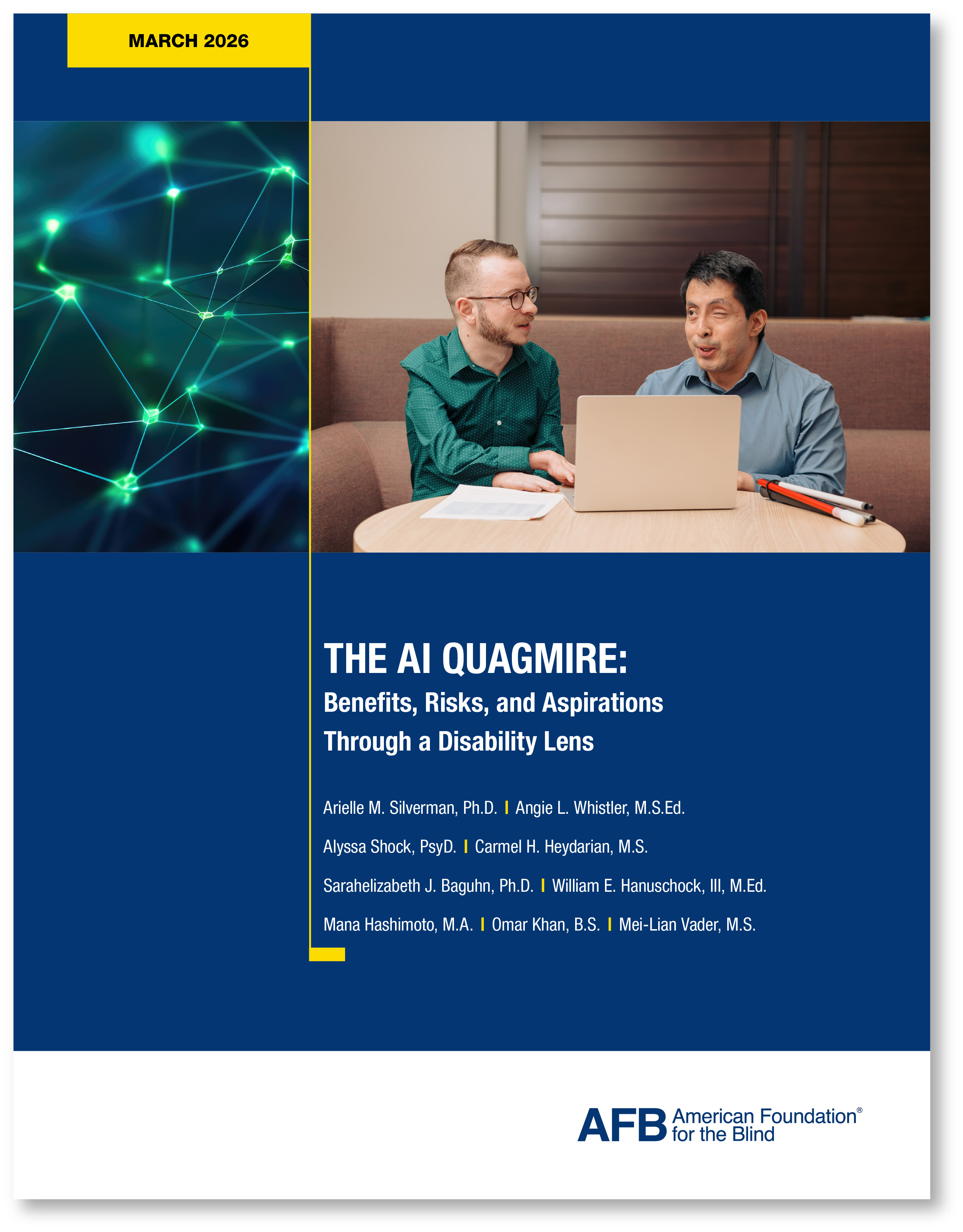
Research Report | March 2026
Artificial intelligence is infiltrating all aspects of our lives shaping how people learn, work, communicate, and access essential services. For people with disabilities, including those who are blind or have low vision, AI promises the moon: enabling access to information across formats, supporting independence, and reducing longstanding barriers. At the same time, the expansion of AI introduces new and often poorly understood risks, including its own inaccessible design features, biased decision-making, privacy concerns, and overreliance on systems that may not yet be accurate or equitable.
The findings from AFB’s national survey of AI users with and without disabilities highlight a central tension: AI is both a powerful accessibility tool and a source of emerging inequities. Participants reported widespread adoption of AI, meaningful benefits in communication and productivity, and strong interest in further skill development. Yet they also described persistent accessibility barriers, challenges in high-stakes contexts such as employment and healthcare, and a clear preference for human interaction when privacy is at stake.
This report, The AI Quagmire: Benefits, Risks, and Aspirations Through a Disability Lens, shares AFB’s analysis of current usage trends, which can be used by developers, employers, educators, policymakers, and users themselves. We invite you to join us in leveraging this data to make intentional design choices, rigorous evaluation of AI tools, and shared accountability to ensure that AI expands access rather than deepens disparities.
Expanded Findings on AI by Topic
AFB is publishing a series of detailed reports that explore the findings from the AI Quagmire. Each report focuses on a different topic and shares data to help us understand how AI intersects with the lives of people with disabilities.
Transportation
Navigating Toward AI: Transportation Access in a Changing Technology Landscape
Download the Transportation ReportEmployment
Working with the Machine: AI’s Expanding Role in Employment for People With Disabilities
Download the Employment ReportEmpowering or Excluding: New Research and Principles for Inclusive AI
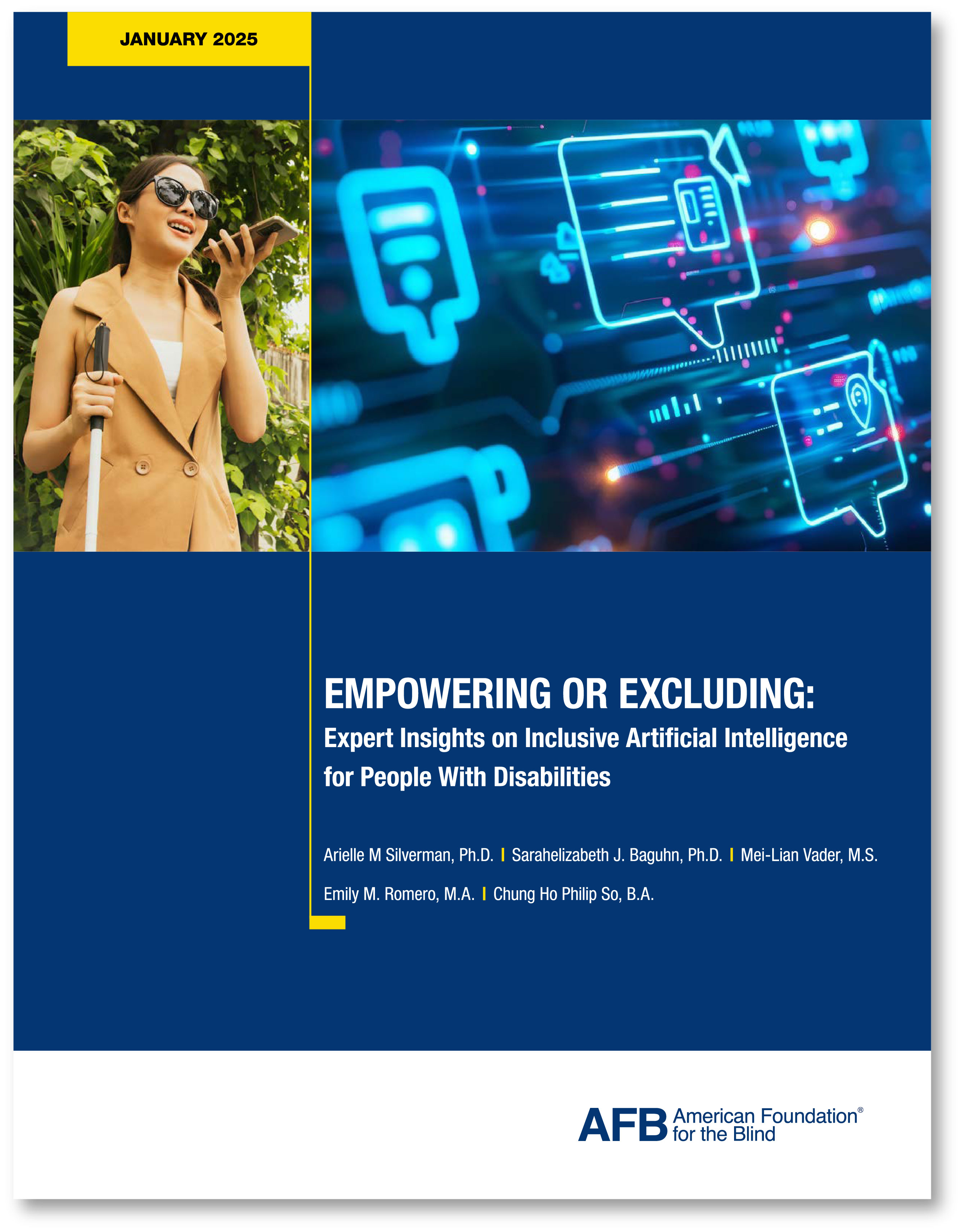
Research Report | January 2025
In recent years, artificial intelligence (AI) systems have grown in capability and versatility. As the capabilities of AI and automated systems expand, there is much excitement about the potential for autonomous vehicles, AI-enabled tools at school and in the workplace, and other innovations that could increase human efficiency. Many of these new technologies can help promote inclusion and accessibility. However, like all new technologies, AI can also pose risks for people with disabilities. AFB researchers conducted a study to synthesize the opinions of 32 experts about where AI is headed and how it will likely impact people with disabilities.
The findings emphasize the shared responsibilities of AI developers, the businesses deploying AI, people with disabilities, and policymakers in collaborating to ensure that AI expands access and inclusion. Based on the findings, we present a list of guiding principles stakeholders can follow to develop and deploy more inclusive AI systems.