AI Learning Methods
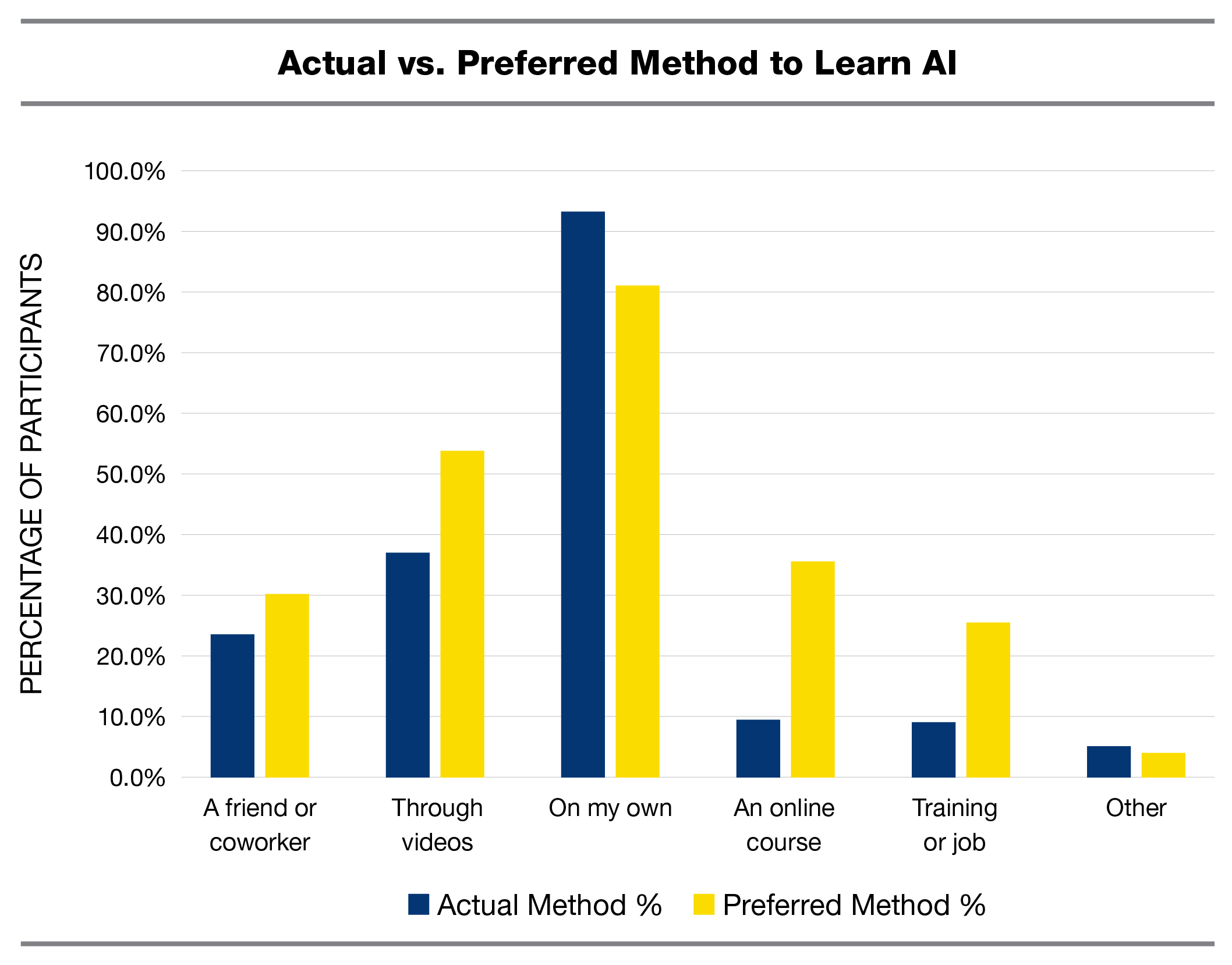
Participants were asked which methods they used to learn about AI tools and could select more than one option. Regardless of disability status, most participants (92%) said they learned to use AI by playing with it on their own. While 36% learned through videos and 24% learned by having a friend or coworker show them, only 9% learned on the job or by taking an online course. Women were more likely to learn AI through a friend or coworker (27%) than men (17.5%) or other genders (14%). Conversely, men were more likely to learn AI by watching videos (47%) compared to women (30%) and other genders (36%).
Regardless of disability status, most participants (92%) said they learned to use AI by playing with it on their own.
The participants also indicated which learning methods they would ideally prefer to use when learning new AI tools. The chart compares the percentages of participants who used versus wanted to use each learning method. While only 9% of the participants learned AI on the job, 26% would like to receive AI training from their employer. Similarly, only 9% of the participants took online courses to learn AI, but 37% said they would prefer to do so. Again, more women wanted to learn through friends or coworkers showing them (34%) compared to men (26%) and other genders (21%). Disability status was unrelated to preferred AI learning method.