Navigating Toward AI
Transportation Access in a Changing Technology Landscape
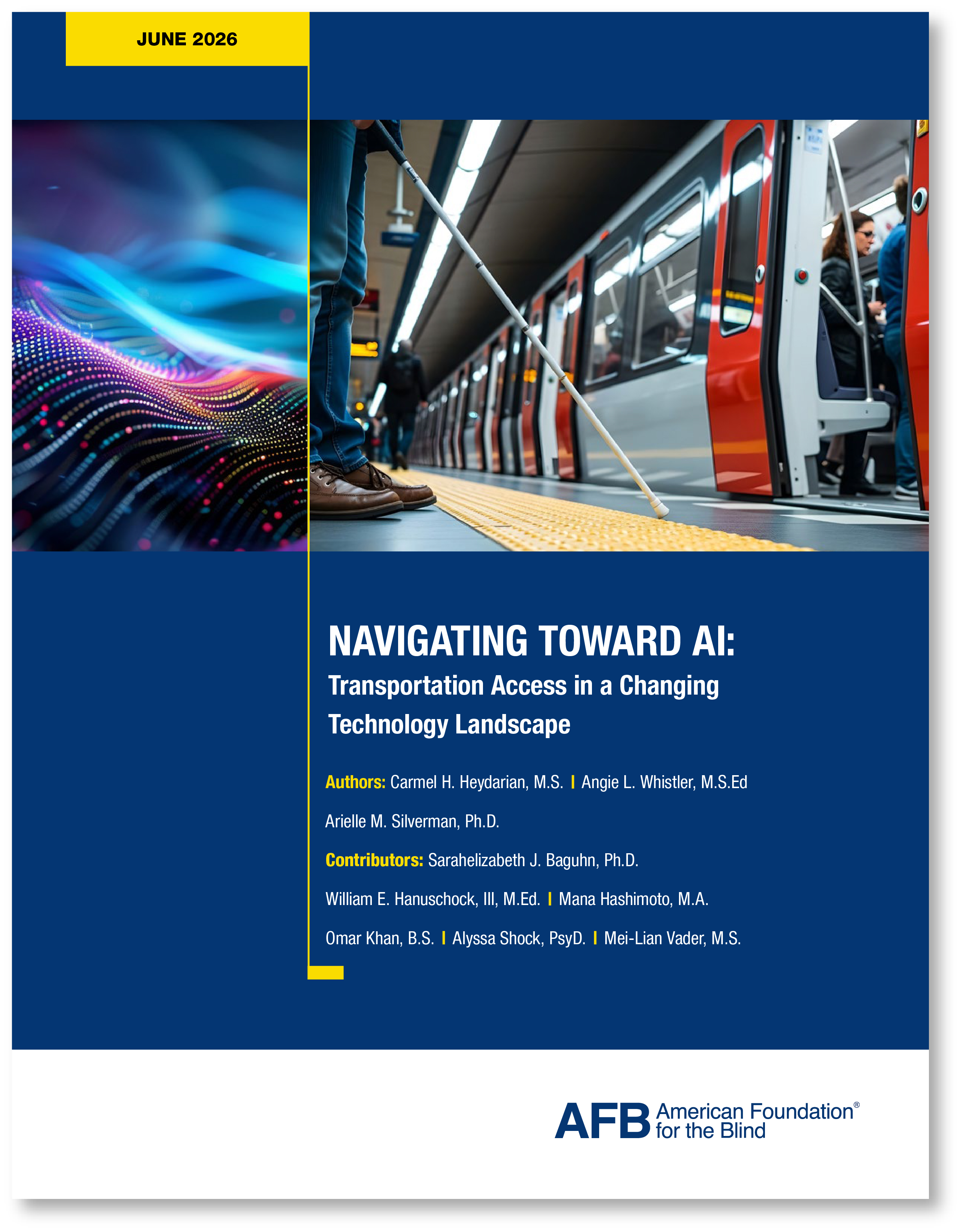
Supplementary Research | June 2026
This report presents comprehensive analyses about AI and transportation from the larger survey, The AI Quagmire: Benefits, Risks, and Aspirations Through a Disability Lens. In this larger survey, the American Foundation for the Blind (AFB) researchers surveyed U.S. adults with and without disabilities to assess attitudes toward the significance of autonomous vehicles (AV) and public transit development. As an extension of the broader survey's findings, Navigating Toward AI focuses on the experiences and opinions of people with disabilities regarding current and future transportation conditions.
Download the Navigating Toward AI report or access all contents below.
Download the Navigating Toward AI Report
Authors: Carmel H. Heydarian, M.S. | Angie L. Whistler, M.S.Ed. | Arielle M. Silverman, Ph.D.
Contributors: Sarahelizabeth J. Baguhn, Ph.D. | William E. Hanuschock, III, M.Ed. | Mana Hashimoto, M.A. | Omar Khan, B.S. | Alyssa Shock, PsyD. | Mei-Lian Vader, M.S.
Table of Contents
AI and the Future of Transportation Systems
Language Note
In this report, we have used both person-first language (“people with disabilities”) and identity-first language (“disabled people”) when describing disability. This is an intentional choice meant to honor differing preferences within the broader disability community, an approach supported in research literature (e.g., Dunn & Andrews, 2015). In addition, we have used identity-first terms when specifically describing three disabilities: “BLV people,” meaning blind and low-vision people; “D/HH people,” meaning deaf/Deaf and hard-of-hearing people; and “autistic people.” This choice reflects the strong preference for identity-first language voiced by many members of these particular communities.
Acknowledgements
We thank Sarah Malaier and Stephanie Enyart for developing the recommendations at the end of this report and for offering feedback on earlier drafts. We are also grateful to the working group of 19 disability organizations whose input shaped the survey questions and design. Finally, we thank the Ford Foundation for supporting American Foundation for the Blind’s efforts on AI and workplace technology to ensure equal rights for people with disabilities.
Introduction
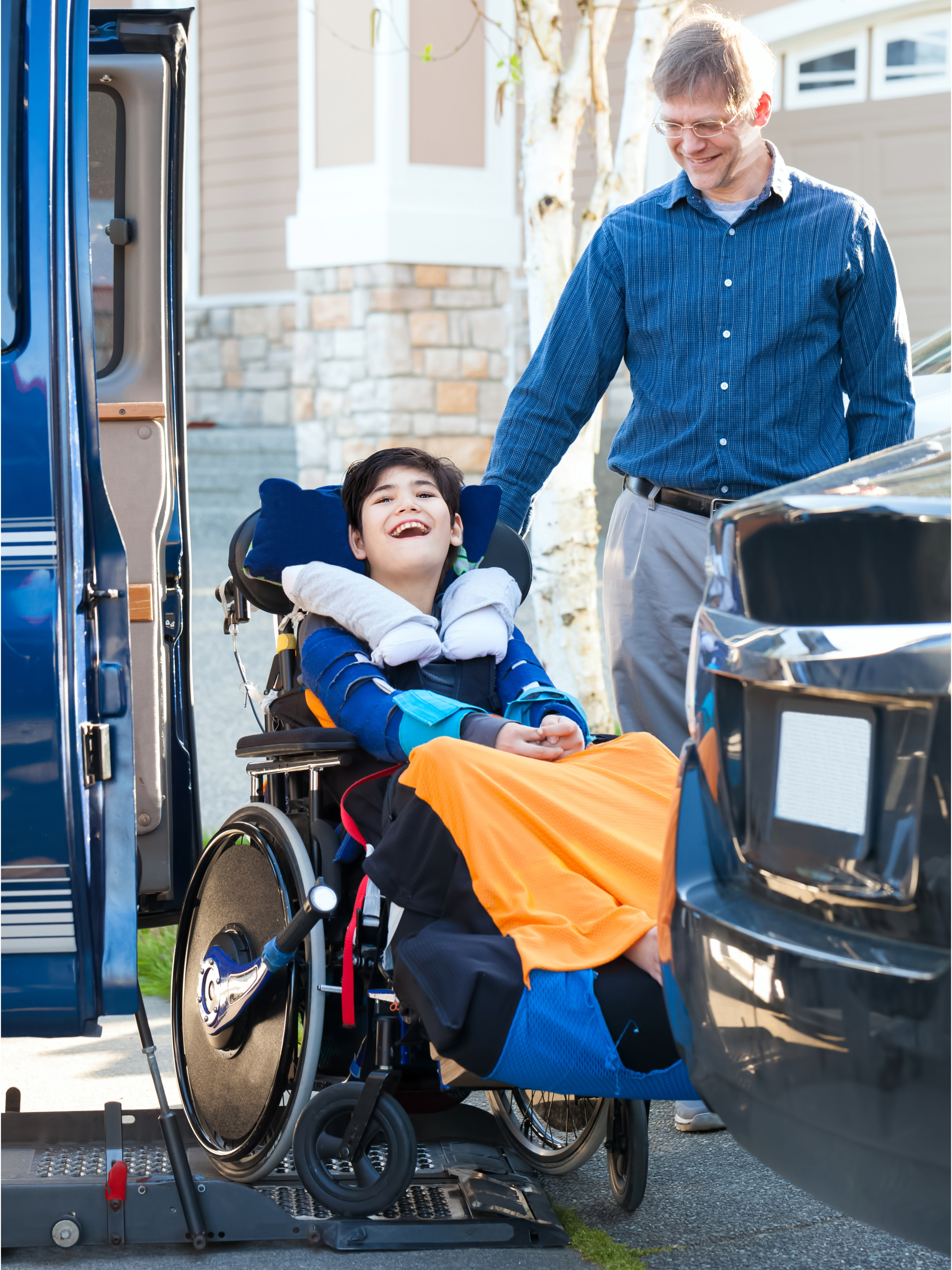
New inroads into artificial intelligence (AI) development, especially for autonomous vehicles (AVs), make it feel like the future is knocking at society’s doorstep. While not (yet) the flying cars often dreamed of in the previous century, the growing presence of AVs in major metropolitan areas is causing many people with disabilities to feel similarly excited about opportunities for greater transportation access. For some people who cannot drive due to their disabilities, AVs offer the dream of freedom of movement. Furthermore, for all participant populations, AI’s integration into transportation could alleviate some of the most frustrating barriers, like traffic, lack of service in rural areas, and unreliable service for public transportation users. Alongside these hopes, though, the use of AI and AVs comes with specific needs: full accessibility for various types of disabilities, including both accessibility of the vehicle and of the AV experience; affordability of new transportation modes; human oversight; policy guardrails; and assurance that public transportation services will not be reduced or deemphasized.
In 2025, AFB published a white paper detailing the consensus predictions of 32 AI and disability experts on how artificial intelligence (AI) will impact people with disabilities. While the expert panel agreed on other topics, they voiced diverse opinions about the benefits and risks of AVs. Some experts thought that AVs would revolutionize transportation for people with disabilities who cannot drive, removing barriers that a lack of transportation can pose for community participation. Others were unsure whether AV availability would spread widely beyond the few cities where they are currently operating, citing concerns about the cost of AV technology and regulations that limit their use. Concerns were also raised about the safety of AVs when interacting with disabled pedestrians. Although many of the experts felt that investments in AV technology and public transit were both important, one expert believed that public transit was a better long-term investment than AV development. Finally, the experts described potential benefits of AI for improving sidewalk accessibility and wayfinding for disabled pedestrians (Silverman et al., 2025).
Building on the expert consensus study, AFB researchers conducted a larger study about AI use (Silverman et al., 2026), and surveyed U.S. adults with and without disabilities to assess their attitudes toward the importance of AV and public transit development. A subsample of participants who had ridden in an AV answered additional questions about their impressions of the experience, including its accessibility and affordability. Finally, all participants were asked to elaborate on whether they thought AI would improve the travel experience for pedestrians and public transit users though many also shared their hopes and fears about AVs. By and large, the research team sought to identify both experience-centered trends and participants' opinions regarding current and future transportation conditions. This report presents the full findings from the transportation questions asked in the larger survey.
Description of Participants
A total of 1,735 adults in the U.S. completed the survey between July 1 and October 15, 2025. This sample included 1,070 participants who self-reported having a disability or a chronic health condition, and 665 who self-reported having no disabilities or health conditions. The most frequently represented disability types included chronic health conditions (30%), mental health conditions (27%), blindness/low vision (21%), ADHD (13%), and physical disabilities (9%), with smaller participant numbers identifying as autistic, Deaf or hard of hearing, and as having learning and speech disabilities. Many participants selected more than one disability type. Individuals from all 50 U.S. states, the District of Columbia, and Puerto Rico participated.

The participants were 63% women, 32% men, and 5% of other genders; 78% were White non-Hispanic. For selected comparisons between race groups, race was collapsed into two categories: White participants (those indicating they were only White non-Hispanic) and non-White participants (those indicating any other race). For selected comparisons between age groups, age was collapsed into four categories roughly approximating well-known generational cohorts: ages 18-25 (“Gen Z”), ages 26-45 (“Millennials”), ages 46-65 (“Gen X”), and ages 66 and older (“older adults," combining members of the Baby Boomer and Silent generations).
When asked whether they drove a car at the time of the survey, 502 participants (29%) said no. This included 321 participants who had never or rarely driven a car and 181 who used to drive but no longer did. All 1,735 participants had the opportunity to answer the question about their thoughts on the future of transportation, including public transportation; however, only participants who indicated they had used AVs prior to the survey could answer questions related to AV experience.
Transportation Attitudes
Attitudes Toward Autonomous Vehicles
All participants were asked to rate how important they believed it was for companies to develop AVs on a four-point scale ranging from “not important at all” to “extremely important.” Participants with disabilities believed AVs were more important than nondisabled participants. Specifically, 22% of disabled and 12% of nondisabled participants thought AV development was “extremely important.” When combining the “extremely” and “somewhat” important ratings, 50% of disabled participants and 42% of nondisabled participants thought AVs were important. When specific disability types were compared with nondisabled peers, the only disability group with a markedly different opinion from the nondisabled were blind and low vision (BLV) participants. Specifically, 47% of BLV participants and only 12% of sighted participants thought AVs were “extremely important.”
When combining the extremely and somewhat important ratings, 74% of the BLV participants and 41% of the sighted participants thought AVs were important. The data points to a clear increase in enthusiasm for AVs among BLV participants, likely because BLV people are frequently non-drivers and face significant barriers with public transit, transportation autonomy, and pedestrian mobility, as similarly noted by Brady et al. (2026).
Driver status also matters when considering participants’ opinions on the importance of AVs: 37% of nondrivers thought AV development was “extremely important,” but only 11% of drivers felt the same way. When combining the extremely and somewhat important ratings, 66% of nondrivers, but only 37% of drivers, thought AV development was important. It is noteworthy that most nondrivers in this sample were disabled — 44% of participants with disabilities were nondrivers, including 43% of those with physical disabilities and 83% of the BLV participants, while only 9% of participants without disabilities were nondrivers. This relationship may differ in other samples.
Finally, even when accounting for driver status, men and older participants thought AV development was more important compared to women and younger participants. For example, 57% of older adults thought AV development was at least somewhat important, compared to just 40% of Gen Z participants. Over half of men (54%) thought AV development was at least somewhat important, but only 44% of women did.
Nondrivers, people with disabilities, older participants, and men believed that autonomous vehicle development should be a priority. On the other hand, participants who could drive, women, and younger participants did not think the development of autonomous vehicles was as important. In a previous study (Siegfried et al., 2021), older adults specifically desired the development of AVs due to a belief that AVs could expand their freedom of movement. While hesitant now, older adults showed an increased willingness to try AVs again in the future if they garner "proven safety records,” “dependability and accuracy," "ability to interface with the vehicle," and an "ability to override the automated system" (Siegfried et al., 2021).
Attitudes Toward Public Transit
Because transportation investments often involve tradeoffs, all participants were also asked how important they think it is for cities to have good public transportation. When examining participants’ responses to questions about how much they valued AV development and public transit development, a majority valued public transit more than AVs. In fact, almost everyone (98%) rated public transit as at least somewhat important, while fewer than half (47%) thought AV development was at least somewhat important. The support for public transit is particularly notable, given that all survey respondents were asked these questions regardless of whether they use public transit.
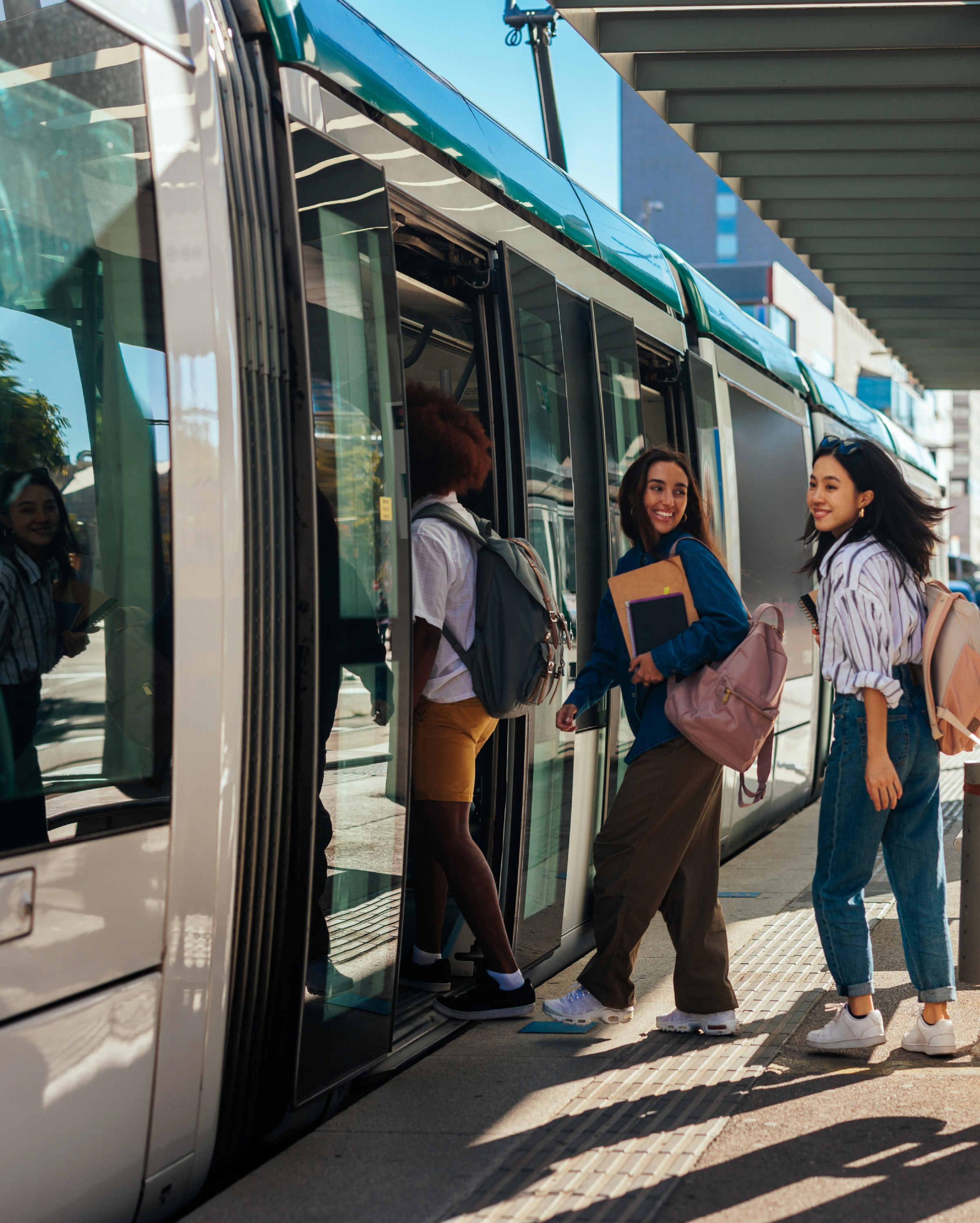
While there was consensus across the sample groups about the importance of public transportation, support was higher among disabled people. Among disabled participants, 92% rated public transportation as “extremely important,” and 7% rated it as “somewhat important.” Among nondisabled participants, 82% rated public transportation as “extremely important,” while 16% rated it as “somewhat important.” Among drivers, 85% rated public transportation as “extremely important” while 13% rated it as “somewhat important.” Nondrivers were more enthusiastic about good public transportation: 96% rated it as “extremely important” whereas 3% rated it as “somewhat important.” Among disability subgroups, BLV and autistic participants and those with mental health conditions were almost unanimously in favor of public transit development. Across the board, support for public transportation development was higher than support for AV development.
AV Rider Experiences
Participants who had tried an AV at least once (n=165) answered questions about their experience. This subsample included 94 disabled and 71 nondisabled participants, most of whom reported riding in a Waymo (56%) or a self-driving Tesla (41%), with smaller numbers trying Cruise, Zoox, and other brands. Some participants had ridden in multiple brands of AVs.
All riders were asked about the accessibility of their experience and whether or not they could afford to ride an AV in the future. They also provided open-ended comments elaborating on accessibility, affordability, efficiency, and safety concerns.
AV Accessibility
Accessibility for People with Physical Disabilities
In order to physically access an autonomous vehicle, riders must be able to independently find and enter the vehicle, secure any mobility aids, transfer to a seat or apply restraints to their wheelchair, and then safely exit at their destination without assistance from a driver. People with physical disabilities, especially those who use wheelchairs or walkers, often cannot complete one or more of these steps with current AV designs. Current AVs generally lack features like ramps or lifts, adequate space for storing large mobility aids, and independent wheelchair securement and restraint systems.
Indeed, although 159 people with physical disabilities completed the survey, and 68 of them (43%) were nondrivers, only 9 of them (6%) had ridden in an AV, compared to 85 people with non-physical disabilities (10%) and 71 people with no disabilities (11%). The low representation of people with physical disabilities in the AV rider subsample likely reflects the fact that many people with physical disabilities that affect their lower limbs and mobility cannot enter or ride an AV at all.
For example, a participant who uses a power wheelchair explained that, “the big part for me is being able to get my wheelchair on and off [and] in and out of the vehicle, and if I have to be able to do that on my own, most cars are not designed for that.” This participant did a demo with an AV that had “a ramp that dropped out,” and they added, “the only real accessible way of using it if you’re in a wheelchair is to make sure that it can pick you up where you’re on the curb and the wheels of the vehicle are on the street. If the ramp comes out and picks you up at street level, the ramp will be very steep and very unsafe.” This comment underscores the importance of designing for accessibility from multiple angles and raises the concern that street design and curb use policies may play an important role in AV adoption, alongside the accessibility of the vehicle itself.
Since almost all physically disabled survey participants had not been inside an AV, they were excluded from later questions about their AV experience and suggested improvements. Nearly half of them were nondrivers who could potentially benefit from a physically accessible AV. It is imperative for AV designers to solicit feedback from mobility aid users early in the design process, especially from individuals who cannot physically access current AVs to engage in traditional demos or user testing.
Further Aspects of AV Accessibility
Even when people can physically ride in an AV, they may not have full access to the experience of requesting a ride, finding the right vehicle, using the ride controls, and locating their destination. The 165 AV riders, all of whom could physically access the vehicle, were asked if the ride experience was fully accessible to them. In response, 114 people said the experience was fully accessible, 38 said it was not, and 13 were unsure.
While the difference between disabled and non-disabled riders’ accessibility experience was not statistically significant (65% of disabled riders and 75% of nondisabled riders said the experience was fully accessible), there was a statistically significant effect for BLV AV riders. Of the 35 BLV participants who had ridden in an AV, only 49% said the experience was fully accessible, compared with 75% of the sighted riders. Specifically, BLV participants described accessibility as almost paradoxical. Conceptually, AVs could be transformative for BLV transportation and independence, but frequently, AVs miss the mark in practice.
The most recurring accessibility challenges included difficulty finding the vehicle, lack of auditory cues, and struggles with safe pick-up/drop-off, including safe places to exit. One BLV participant explained: “It used a map pin feature in the app to locate my destination. If I couldn't use the pin, the car would drop me somewhere that may or may not be near my actual destination. It also had a few hardware onboard screens that I couldn't access. The [turn-by-turn] directions worked sometimes and sometimes not.” One BLV participant named a concrete design need that would immediately improve usability: “I wish there was an auditory cue to find the vehicle and some way of ensuring it was safe to get out.”
The problem of drop-offs not aligning with exact destinations was particularly acute, as one participant described: “I’ve been dropped off nowhere near my actual destination more times than I can count… No amount of feedback… seemed to change anything.” While many people may be able to adjust to an unexpected drop off, for some people with disabilities, being dropped off in the wrong location can be frustrating, scary, or even dangerous. For example, a person with a mobility disability may not have the strength to travel additional distance; a BLV person may not know where they are relative to their intended destination; or a person with a cognitive disability may not be able to figure out the rest of the route.
AV Affordability
Regardless of disability status, only 36% of AV riders said they could afford to pay for an AV whenever they wanted or needed one. Comparatively, 45% of riders said they could afford an AV “every so often.” The remaining 18% of riders said they could not afford to pay for an AV again. This suggests that for most riders, AVs are not affordable as a regular form of transportation. The following table further breaks down riders’ estimated ability to afford AVs by disability status.
Table 1
| Ability to Pay for AVs | Disabled | Nondisabled |
|---|---|---|
| Whenever they want or need it | 36% | 38% |
| Every so often | 42% | 49% |
| Could not afford again | 22% | 14% |
It is important to note that this sample was relatively well educated and employed: 72% held at least a bachelor’s degree, while 79% of the participants had worked within the past two years. Employment rates and incomes for most disabled populations nationally are much lower than those represented in this survey, meaning that the disabled people in this sample may be somewhat more able to afford AVs at current prices than the general population of people with disabilities.
In open-ended comments, some participants focused on pricing structure and equity, arguing that AVs should cost less than human-driven options and criticizing pricing that feels aimed at tourists: “They’re great at driving but they cost too much now because they are priced for tourism in San Francisco now.” Another participant was even more critical: “AV’s should be cheaper than human-driven options. I think the companies are price gouging.” Participants’ feedback treated cost as a core design issue because they determine whether AVs can be used regularly for transportation or if they remain only an occasional luxury.
Efficiency, Availability, and Safety Concerns
In open-ended comments about how AVs could be improved, participants also flagged operational friction that designers can treat as solvable product problems rather than “user error,” including inconsistent and unsafe drop-off points, inefficient routing, and ineffective customer service when something goes wrong. One person described inefficient routing: “The Waymo took a long route to get me home, which took 45 minutes instead of 25.” Without further information, it is hard to know why the Waymo took a circuitous route. This issue may have been a routing error caused by the automated driving system or could be related to the fact that may AVs have had restricted access to highway routes. Another rider pointed to a repeated, unresolved drop-off problem.
Even small workflow gaps can matter, like retrieving lost items when the vehicle immediately moves on: “If you lost any items inside the car, it isn’t easy to retrieve them because the vehicle moves to pick up the next person.” The absence of a driver also may mean no employee of the company can look for the lost item until the end of a car’s shift. A different participant captured the emotional frustration of these issues: “I do not like [the] absence of control.”
Further concerns arose in open-ended responses regarding the availability of AVs in geographic areas, especially rural and suburban locations. Participants, regardless of disability status, emphasized the limited availability of AVs in many parts of the country, with companies mostly concentrating on large cities with heavy rideshare presence and demand. Participants also noted that public transportation systems are frequently present in AV companies’ current metropolitan locations, leading to an additional level of independence not present in underserved cities and towns that AVs could help alleviate. As one disabled participant noted:
“I hope that companies such as Waymo and Tesla can deliver such services to small cities as well as large cities, as smaller cities sometimes lack the public transportation infrastructure of larger ones and would therefore have the potential to be better places to test such technology. Such availability would make mobility easier for disabled individuals who do not live in metropolitan centers.”
Several participants used an AV while traveling but could not continue accessing AVs because they were not available where the participant lived.
Finally, 9 participants framed AV improvement as a trust-and-safety engineering challenge, not just a technical milestone. These 9 participants described AVs as surprisingly smooth and “normal,” but many asked developers to handle edge cases more predictably to ensure smooth rides are the standard rather than seemingly a luxury. Furthermore, some of these participants voiced concerns about sudden braking, uncertain behavior in complex environments, and the lack of a human fallback in ambiguous moments. One participant described a concrete safety failure: “I found the AV to be quite accurate overall, but occasionally the vehicle would slam on the brakes for no apparent reason.”
Summary
For many disabled users, AVs felt like a new transportation option or a catalyst for transportation autonomy, whereas for nondisabled users, they felt more like a novelty. A disabled user explained that AVs “have a significant potential to make transportation safer and more efficient in the future” by “bring[ing] new freedoms to people who have disabilities that limit their independence." In contrast, a nondisabled user wrote,” I felt like it [is] more of a novelty to use Waymo (or any other AV service)... However, it was cool to be an early user of an AV program because I'm excited to see where the technology will be in the future!”
Alongside the optimism, participants offered a consistent improvement agenda; they want AVs that people can actually afford, locate, enter, ride, and exit independently. They want systems that communicate clearly, behave consistently, and give riders meaningful recourse when the system makes a mistake. Again, only people who had been inside an AV answered these questions, and mobility device users who cannot physically access current AVs likely have additional design feedback.
AI and the Future of Transportation Systems
Autonomous vehicles are not the only way in which AI is being used in the transportation sector. It is being incorporated into vehicle safety systems, traffic management, infrastructure assessments, wayfinding applications, and more. To better understand the anticipated effect of AI on nondriver modes of transportation, participants were asked whether or not AI would “make it easier to get around while walking or using public transportation.” 52% believed AI will make it easier to get around, 36% were unsure, and 12% thought it will not make it easier. This did not differ between the overall disabled and nondisabled groups. However, BLV people were more optimistic that AI will improve walking and public transportation (68%) than sighted people (48%).
Additionally, differences were found across generations, genders, and racial groups. Unexpectedly, older participants were more optimistic about AI’s potential to make transportation better: 91% of participants over age 65 said it would, compared to 86% of Gen X, 78% of Millennials, and 76% of Gen Z; Gen Z and Millennials were more likely than older participants to say AI will not make transportation better (Gen Z: 14%; Millennials, 14%; Gen X, 9%; older than age 65, 6%). Men were also more optimistic that AI would improve transportation, while women tended to be less sure of the impact. 60% of men said AI would improve transportation, compared with 49% of women. In contrast, 39% of women were unsure about AI’s benefits for transportation, compared to 29% of men. Finally, White participants were slightly less optimistic about AI’s ability to improve transportation, with only 51% saying “yes,” compared to 59% of non-White participants.
Overall, participants described AI in transportation as a future that feels both plausible and unsettled, with optimism tempered by practical distrust. Across responses, two tracks ran in parallel. Many participants imagined AI embedded into the “plumbing” of transportation through smarter routing, better trip planning, improved signal timing, real-time hazard detection, and clearer rider communication. These responses described systems that could make transit and traffic run more efficiently and reduce friction in everyday movement.
At the same time, skepticism emerged as the single most common qualitative theme, and even many respondents who said that AI would improve transportation described conditions for that improvement. Participants drew a line between helpful assistance, such as alerts, navigation guidance, and timing information, and trusting AI to make decisions in complex environments. They repeatedly framed AI acceptance as contingent on accuracy, accessibility, regulation, and clear accountability in the event of system failures. One participant captured that boundary clearly:
“I would not trust it for crossing a street, but maybe telling me a curb is ahead and what street I am on would be useful.”
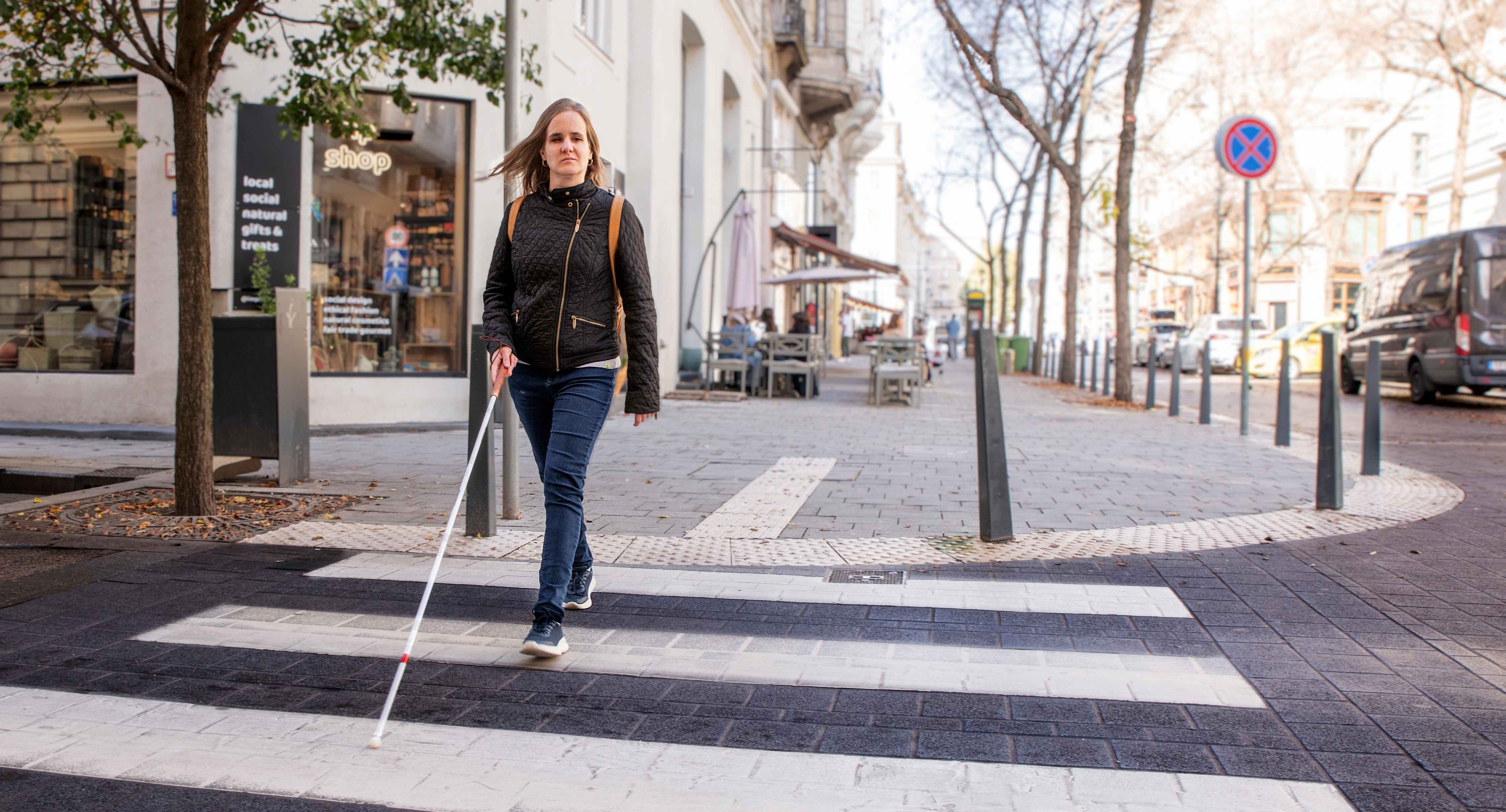
Furthermore, many participants hoped AI could reduce human driving errors, yet others worried about edge cases, pedestrian safety, and what would happen when automated systems made mistakes in environments that already pose hazards to disabled travelers. Safety sharpened this tension. Participants treated reliability as non-negotiable, especially when guidance affects real-time decisions. As one participant put it, “This assumes the information is accurate, which is still a concern with the current technology.” Finally, some participants worried that AI could disrupt employment in the transportation sector by taking jobs away from transit drivers. One participant said, “Hopefully, autonomous vehicles will work better, but bus drivers will lose their jobs.”
Taken together, participants did not describe a simple yes-or-no future. They described a future that hinges on whether AI-enabled transportation earns the trust of average travelers through dependable performance, accessible design, and governance that protects people when the technology fails.
Conclusion
In this survey, the future of transportation emerged as both a clear concern and a hopeful opportunity for AI integration. Regardless of disability or driver status, public transportation remains important to many people even amid hopes of AV expansion and AI integration in other transportation systems. Yet, participants shared mixed feelings about whether AI would improve public transit, with some enticed by the prospect of greater efficiency and others wary of AI’s potential hallucinations that could lead to safety errors or of job losses for bus/train drivers.
Participants also had highly conflicted feelings about AVs. BLV participants, older participants, and men were more excited about the future of AV development than other groups, as they hoped AVs could lead to greater autonomy and freedom of movement. However, amid the excitement, some participants shared feedback on AVs’ current operations, highlighting needed improvements in drop-off location accuracy, safety, physical and experiential accessibility, and a more pleasant driving experience. For some riders, one or more of these factors may drive whether and when they use AVs as a regular transportation mode.
Ultimately, participants were hesitantly optimistic about AI’s integration into specific areas of transportation, such as AVs and the transit sector. However, they raised concerns and recommendations to ensure AI serves the public's needs safely, equitably, and equally. This survey showed that although there is interest in AI and its integration into transportation, good public transit is a high priority for most respondents and should not be sacrificed in favor of other modes. Participants' responses illustrated how AI could be a boon for BLV, older, and disabled populations, offering a future with greater freedom of movement and autonomy. If implemented with clear accountability policies and safety mechanisms, AI could serve as a catalyst for unburdening core bottlenecks in transportation, such as traffic and human error. However, AI and AV deployment should not be at the expense of accessibility, clear communication, or public transportation.
Recommendations

The following recommendations outline actions that policymakers, transportation agencies, and companies that create AI for use in transportation should consider to address the opportunities and concerns raised in this research.
Ensure that all platforms that integrate AI are fully accessible to and usable by people with disabilities.
- Integrate accessible design for all people with disabilities into AV design at the beginning and plan early for developing fully autonomous vehicles that can safely and effectively accommodate passengers with mobility disabilities.
- Build vehicle and service design teams that include engineers, designers, and UX testers who have disabilities. Invest in education, training, and workplace tools that are accessible to people with disabilities to create a deeper pipeline of developers and engineers with lived experience.
- Understand, research, and develop products that automate solutions for the accessibility challenges that prevent people with disabilities from using transportation vehicles today, including but not limited to automated wheelchair securement, nonvisual navigation and wayfinding, and communication about vehicle operations (such as current location or route changes).
- Require contractual evaluations of accessibility and safety for people with disabilities of AI systems used in transportation when procuring or developing AI in transportation systems, both public and private.
Develop vehicle and Automated Driving System safety systems and tests that ensure AVs are safe for passengers and pedestrians with disabilities. Clearly communicate to the public and government oversight agencies how vehicles have been developed and tested for the safety of disabled people.
- To the extent that AVs are safer than human-driven vehicles, ensure that all people with disabilities can use and benefit from the safety gains of AVs.
- Explicitly test automated pedestrian detection systems with a wide range of people with disabilities and their distinct patterns of travel or movement.
- Provide transparent safety data and clearly communicate responses and improvements needed to increase trust in the use of AI in risky contexts, such as transportation.
- Develop redundant emergency response systems in AVs that provide access and support regardless of vision, hearing, speech, mobility, or cognitive disabilities.
Maximize AI development in the transportation sector to meet the specific access needs of people with disabilities.
- Prioritize research and development to create tools that specifically benefit people with disabilities or that incorporate the access needs that people with disabilities have.
- Invest in data collection and analysis as well as AI model development to improve pedestrian navigation and wayfinding, especially for users who are dependent on the accessibility of the pedestrian environment. Examples include wayfinding apps or conducting infrastructure accessibility audits.
- AV companies should work with AI navigation developers to improve and integrate tools that facilitate safe, accessible navigation to the vehicle and from the vehicle to the destination for people with visual, cognitive, and mobility disabilities.
- Incorporate accessibility into curb use policies to facilitate safe pick-ups and drop-offs with AVs.
Establish governmental guardrails and policies that mandate data privacy and security and ensure accessibility for people with disabilities.
- Continue to invest in public transportation services in all communities while developing novel uses of AI for automated driving and other transportation purposes.
- Issue explicit accessibility regulations for autonomous driving systems and vehicles, especially those that are purpose built for AVs and those that are used to provide transportation commercially or through public transportation.
- Integrate safety for people with disabilities into federal testing and evaluation of vehicles equipped with automated driving systems.
References
Brady, S. A., Grevstad, N., Schliemann, S. A., & Glatthar, C. (2026). Transportation, Ride-hailing, and Discrimination Among the Blind and Low-Vision Community. Transportation Research Interdisciplinary Perspectives, 36, 101837. https://www.sciencedirect.com/science/article/pii/S2590198226000023
Siegfried, A. L., Bayne, A., Beck, L. F., & Freund, K. (2021). Older Adult Willingness to Use Fully Autonomous Vehicle (FAV) Ride Sharing. Geriatrics, 6(2), 47. https://doi.org/10.3390/geriatrics6020047
Silverman, A. M., Baguhn, S. J., Vader, M. L., Romero, E. M., & So, C. H. P. (2025). Empowering or Excluding: Expert insights on inclusive artificial intelligence. American Foundation for the Blind. www.afb.org/AIresearch
Silverman, A. M., Whistler, A. L., Shock, A., Heydarian, C. H., Baguhn, S. J., Hanuschock, W. E., Hashimoto, A., Khan, O., & Vader, M.-L. (2026). The AI Quagmire: Benefits, Risks, and User Aspirations Through a Disability Lens. American Foundation for the Blind. www.afb.org/AI research2
Suggested Citation
Heydarian, C. H., Whistler, A. L., & Silverman, A. M. (2026). Navigating toward AI: Transportation access in a changing technology landscape. American Foundation for the Blind.