Content tagged with this term
*Special Note: Have you booked your hotel room yet? Rooms are going fast! Our room block expires on February 4 or whenever rooms sell out, so book soon to avoid disappointment: online reservations or call 888-236-2427 and reference our conference to get the group rate.

At the American Foundation for the Blind, we were heartened to read that the Department of Justice confirmed clearly and unequivocally, in a September 26 letter to congressional representatives, that the Americans with Disabilities Act applies to online accommodations.
HR620—A "Solution" in Search of a Problem
One of my favorite assistive technology podcasts recently made me grit my teeth, again, over the passage of congressional bill H.R. 620. H.R. 620 is titled the "ADA Education and Reform Bill."
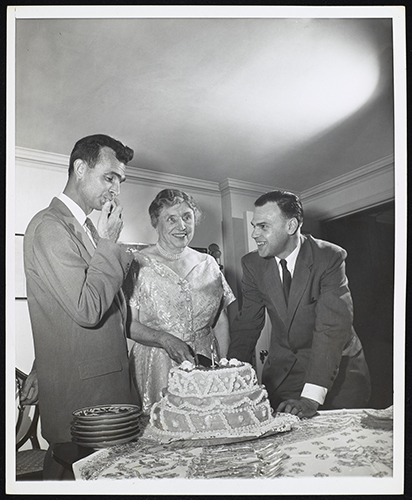
Image left to right, M. R. Barnett, American Foundation for the Blind, Executive Director, Helen Keller and Eric T. Boulter, American Foundation for the Overseas Blind, Field Director. Celebrating Helen's 75th birthday with cake, 1955.
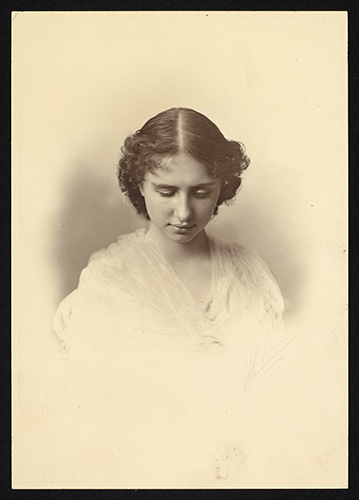
Helen Keller circa 1893.
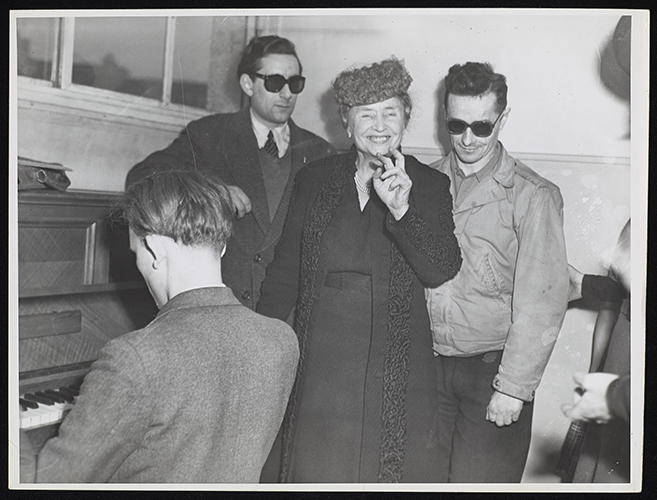
Helen Keller at the Union of the War Blind in Paris, 1946. She is with French veterans blinded during World War II, one of whom is playing the piano.

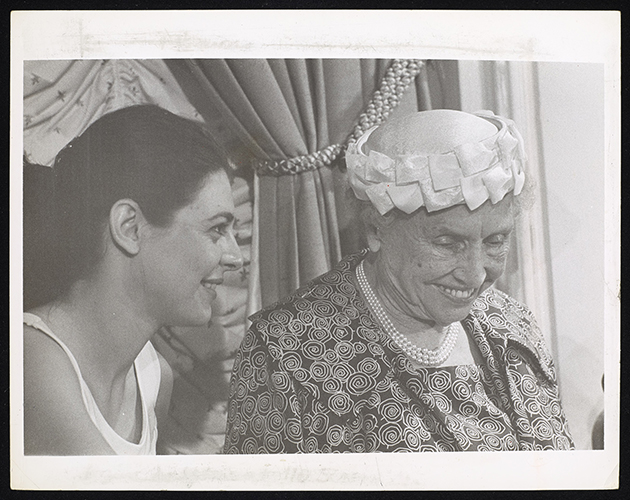
I thought I knew what I would find when I started my tenure as the Metadata Specialist for the digitization project of the Helen Keller Archive.
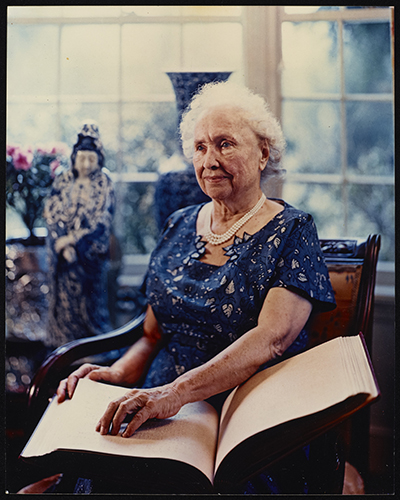
Helen Keller seated and reading a book in braille, Westport, CT, 1960.
Thursday, May 17, marks the seventh Global Accessibility Awareness Day (GAAD), the purpose of which is to get everyone talking, thinking, and learning about digital access/inclusion and people with different disabilities.