DESIGNING INCLUSION
HOW MATTEL AND AFB MADE BLIND BARBIE A REALITY
PRESENTED BY: American Foundation for the Blind
BACKGROUND
In a groundbreaking collaboration, Mattel and the American Foundation for the Blind (AFB) joined forces to design and launch the first-ever blind Barbie Fashionista doll. This initiative represents more than just the introduction of a new product; it’s a bold step toward disability representation in mainstream pop culture and children’s play. With AFB’s unique blend of proprietary research, technical accessibility consulting, and lived experiences, Blind Barbie reflects both authenticity and innovation.
This white paper explores the impact of the partnership and highlights how inclusive product design, digital accessibility, and thoughtful storytelling can drive both social value and business growth.
STRATEGIC OBJECTIVES
The partnership between Mattel and AFB was anchored in a shared mission: To broaden inclusion in the toy industry and set a new precedent for how disability can be authentically represented.
Mattel aimed to build on its existing Fashionista diversity efforts by creating a blind character that would resonate with children who are blind or have low vision, as well as their families, peers, and allies. AFB’s Professional Services division sought to influence the design and development process with research-backed insights and their lived experiences to ensure the product represented blindness accurately and functioned inclusively.
From product aesthetics to packaging and digital presence, both organizations committed to embedding accessibility throughout the product lifecycle. Equally important to AFB was demonstrating the value of nonprofit-corporate collaboration, proving that such relationships are not only ethically important but can also deliver a strategic business advantage.
INDUSTRY CONTEXT AND MARKET OPPORTUNITY
To understand the relevance of the Mattel x AFB collaboration, it’s important to consider market trends in accessibility, disability inclusion, and inclusive product design. Data and research continues to show that embedding accessibility in both physical and digital design results in measurable brand and revenue outcomes.
28% HIGHER REVENUE
According to a 2023 Accenture study, companies that excel in disability inclusion generate 28% higher revenue and are twice as likely to have higher total shareholder returns.
40% OF PARENTS AGREE
Research published by the Toy Association indicates that 40% of parents of all ages believe toys should better reflect today’s diversity. Inclusive toys are increasingly linked to positive developmental and social-emotional outcomes.
This engagement positions Mattel as a leader in inclusive play, alongside other recent groundbreaking products such as Microsoft’s Adaptive Controller and LEGO’s Braille Bricks, setting a precedent in the toy and gaming industries.
AFB’S ROLE ACROSS THE PRODUCT LIFECYCLE
AFB’s contributions spanned 1.5 years across 5 critical phases of the product development and marketing lifecycle:
PHASE 1: DISCOVERY & RESEARCH
AFB’s Research team provided guidance on accurate representation of blindness, including appropriate eye gaze, assistive devices, and avoidance of harmful stereotypes. Recommendations were based on community-informed research and cross-functional lived experiences.
PHASE 2: PRODUCT DESIGN
AFB reviewed early concept art, doll sketches, and physical prototypes. The team advised on realistic cane posture, fashion choices, and tactile elements, such as a unique skirt texture and high-contrast accessories.
PHASE 3: ACCESSIBLE PACKAGING
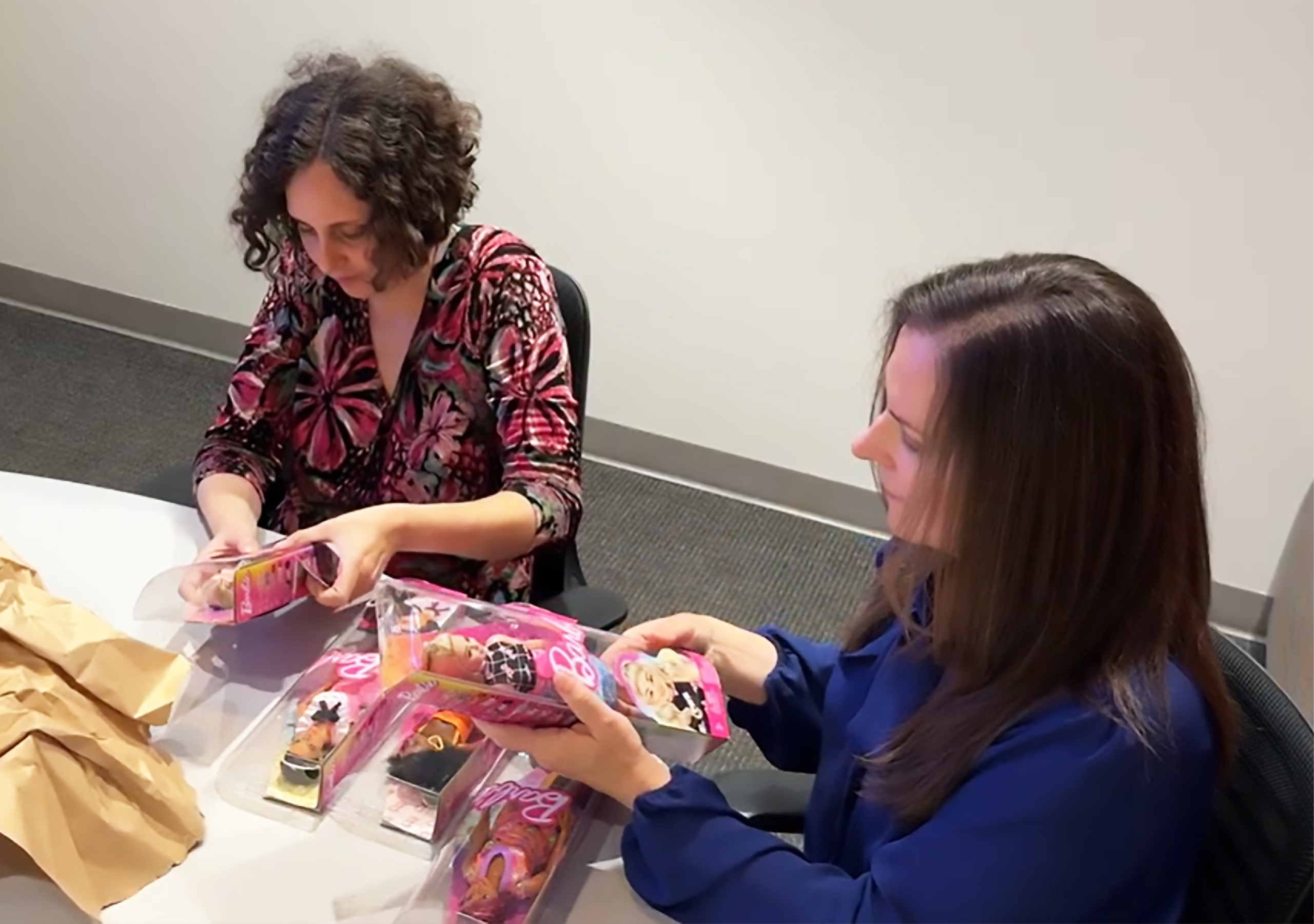
AFB conducted multiple tests and milestone reviews on braille placement, spacing, and usability. Multiple rounds of iterative feedback led to enhanced readability and discoverability, ensuring children could independently interact with the packaging and enjoy a frictionless unboxing experience.
PHASE 4: MARKETING & MESSAGING
AFB’s Communications team advised on the development and use of inclusive language, imagery, videos, and storytelling. The team encouraged reframing narratives around blindness in ways that were affirming, accurate, and avoided overgeneralization. For example, depicting blindness as black in color was strategically avoided in Mattel’s marketing. AFB also collaborated on awareness efforts via its owned digital channels, including web, email, and social media platforms, helping expand the campaign’s reach and visibility within the blind, low vision, and disability community.
PHASE 5: DIGITAL ACCESSIBILITY
AFB’s Digital Inclusion team performed a full WCAG 2.1 accessibility audit of the Barbie Fashionistas digital product pages and checkout flow on Mattel’s website. Key fixes included semantic structuring, alternative text for product images, screen reader compatibility, and improved focus order navigation for keyboard users.
RESULTS AND OUTCOMES
INCLUSIVE DESIGN WINS
- Braille on packaging was revised to include proper spacing, margins, and tactile quality - a major improvement cited in AFB’s final milestone review.
- The white cane’s positioning was redesigned to reflect realistic usage, with feedback guiding every detail from grip and tip type to height and orientation.
- Stylistic fashion elements like heels and tactile fabrics enhanced the doll’s accessories and challenged societal stereotypes, aligning with the real-world diversity of the blind, low vision, and disability community.
DIGITAL ACCESSIBILITY ENHANCEMENTS
- Over 100 accessibility issues were identified across the Barbie digital experience, with suggested remediations for improving usability for access technology and keyboard users. AFB also provided Mattel with digital best-practice recommendations, creating a frictionless and more discoverable e-commerce web experience.
- AFB provided best practices for audio descriptions, including a practical demonstration applied to videos on Mattel’s YouTube channel, enhancing the accessibility and inclusivity of multimedia content.
COMMUNITY AND SOCIAL IMPACT
- The blind Barbie launch generated over 3.2 billion media impressions in the first 48 hours, signaling overwhelming interest and visibility for representation at a global scale.
- The blind Barbie Fashionista doll offers blind and low vision children an opportunity to see themselves reflected in mainstream culture, promoting positive identity formation at a young age.
- Non-disabled children are introduced to inclusive narratives through play, fostering empathy and reducing stigma from an early age.
A parent shared, “When my daughter discovered Barbie using a white cane just like hers, she whispered, ‘She’s like me’ - that moment shows us why this doll matters.”
BROADER EFFECTS OF OUR WORK
The impact of this engagement extends far beyond the product itself, influencing critical dimensions of social and economic change.
REPRESENTATION IN MEDIA & TOYS
Blind Barbie is more than a toy; she’s a symbol of visibility for millions of people often left out of mainstream narratives. Her presence on shelves and screens communicates that disability is part of human diversity.
EARLY LEARNING & PLAY EQUITY
Toys shape how children understand themselves and others. By making accessibility and disability part of the play experience, Mattel and AFB are supporting a more inclusive developmental journey for all children.
CORPORATE + NONPROFIT COLLABORATION
The partnership represents a replicable model for other mission-aligned organizations where AFB can bring more than just advocacy to the table.
AFB’S DIFFERENTIATION
This engagement showcases AFB’s Professional Services division as a forward-thinking, solutions-driven partner capable of delivering enterprise-grade advisory services in applied research, digital accessibility, and strategic communications. Unlike other nonprofits focused on advocacy or direct services, AFB demonstrated its value as a co-creator in the commercial ecosystem.
By leveraging its proprietary data and technical expertise with lived experiences, AFB delivered practical, human-centered insights that elevated the quality of the final product and customer experience. This case illustrates AFB’s unique ability to consult at the intersection of accessibility, representation, and market impact.
PARTNER WITH AFB
AFB Professional Services is uniquely equipped to help brands, agencies, and corporations build inclusive and accessible products and experiences. Our Research, Accessibility, and Communications teams work across product development, digital design, communications, and policy to deliver cost effective and customized solutions grounded in our research, technical expertise, and lived experiences.
We’re here to help your organization build products with purpose. Let’s build what’s next, together.
For press inquiries, contact: communications@afb.org
For business inquiries, contact: BD@afb.org
American Foundation for the Blind | www.afb.org